

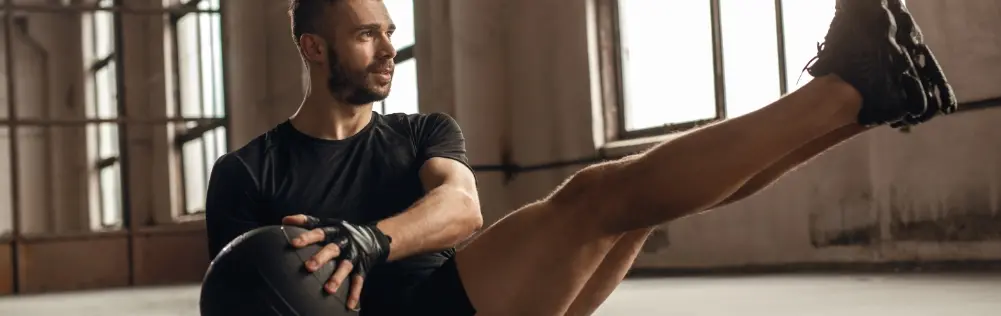
Medicine balls, more commonly known as gym balls, are often used in leisure sports as well as in clubs and schools. They offer multiple opportunities for exercises in muscle development as well as posture-improving drills. Medicine balls are a fundamental part of athletics training.
We all know medicine balls from PE lessons at school but they are a very flexible piece of equipment and offer many other different training setups. They are suitable for balance and strength training and are available in weights between 800 g and 12 kg. To buying guide »
Discover Other Fitness Equipment
Uses and Special Qualities of Medicine Balls
As well as playing a role in fitness and strength training, as mentioned above, medicine balls also play a vital role in rehabilitation. The different models of medicine balls, from the classic leather medicine ball to those made of rubber or synthetic materials, can all be utilized in many ways.
A multi-purpose piece of training equipment, medicine balls can be both a means for play as well as an integral part of exercises and training plans for a varied range of sports disciplines.
They offer numerous advantages and in so doing help to improve strength and reaction as well as coordination and balance.
Medicine balls offer a wide range of exercise possibilities, can be used by athletes of all ages, can improve speed and strength, boost fitness and serve to burn fat.
The Different Weight Categories of Medicine Balls
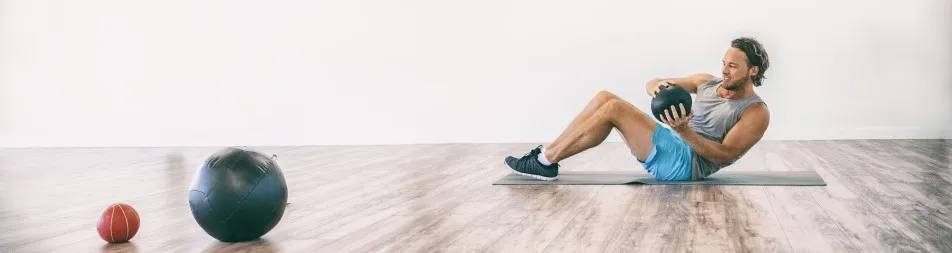
Medicine balls are available in many different weight categories. The weight of the ball used is dependent upon the physical condition, age, and build of the athlete. A lighter ball must be used for endurance training. A 1 kg ball, for example, is ideal. If muscle building is the target then heavier balls can be used. Women unused to muscle-building training should use balls of a weight of up to 2 kg. Women more practiced in the discipline can use balls between 2 and 4 kg. Men new to this type of training should use medicine balls not exceeding 4 kg. Men more trained in this area may use balls between 4 and 6 kg. There is a wide range of very light and very heavy medicine balls.

Using Medicine Balls in Athletics
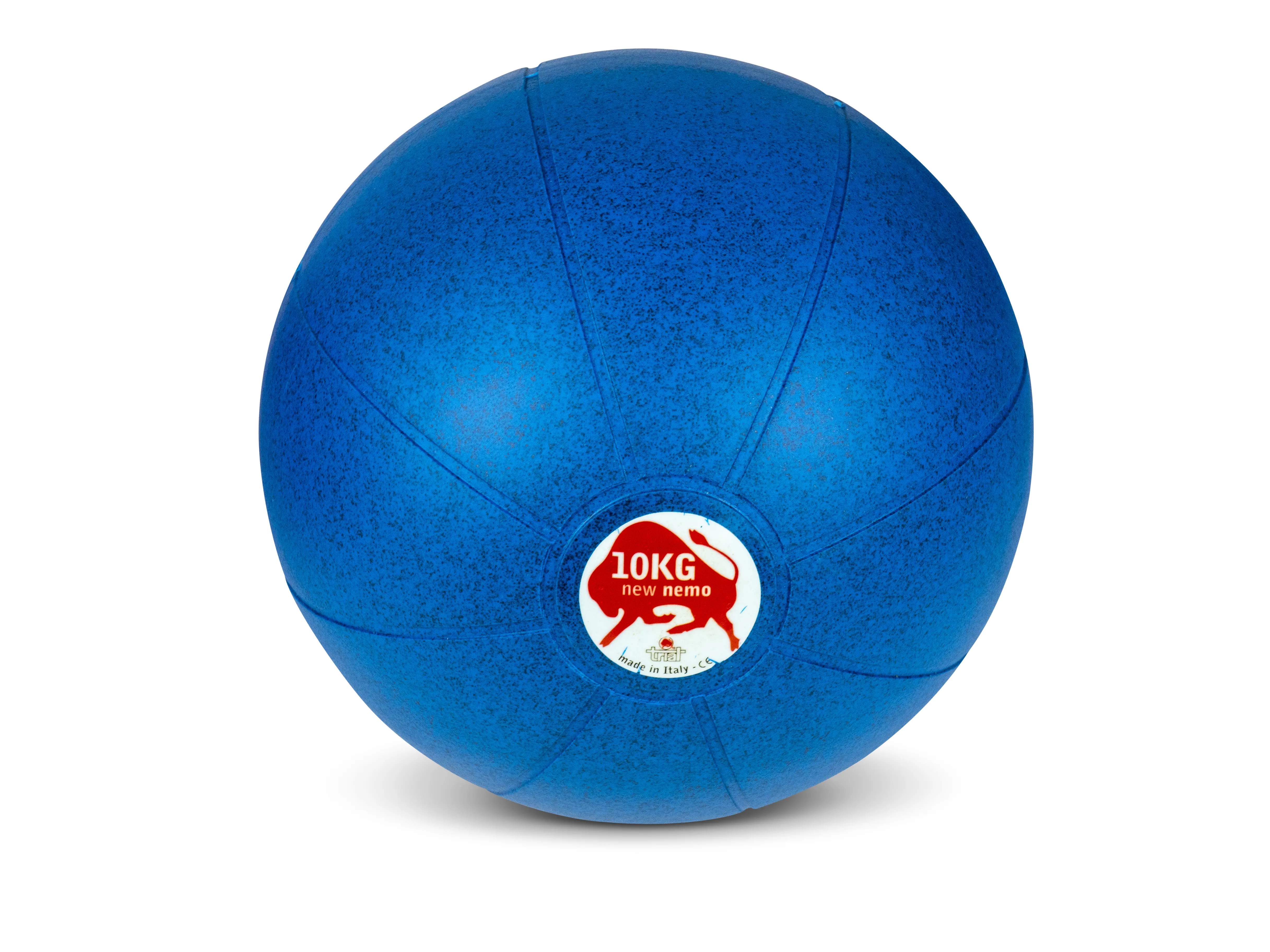
Medicine balls can be used in athletics in many different ways. In addition to more general and more specialized exercises to train throwing power and technique, medicine balls are also ideal as training equipment for general athletics, stabilization, and balance exercises. There is no obvious preference when it comes to the favored material for a medicine ball. We recommend medicine balls made from rubber or synthetic materials for use outside, especially during fall and winter. These can cope well with wetter weather conditions. Rubber medicine balls remain easy to grip and work well for partner exercises. For particularly strong athletes we recommend the New Nemo-Medicine Ball. Made from synthetic material, these balls can withstand considerable force. Leather medicine balls come into their own in indoor training situations. They absorb strength and force very well and are available in a variety of sizes.
Which Material for Which Purpose?
To make it even easier to choose the right medicine ball, you can filter your search according to material:
Medicine balls made from rubber

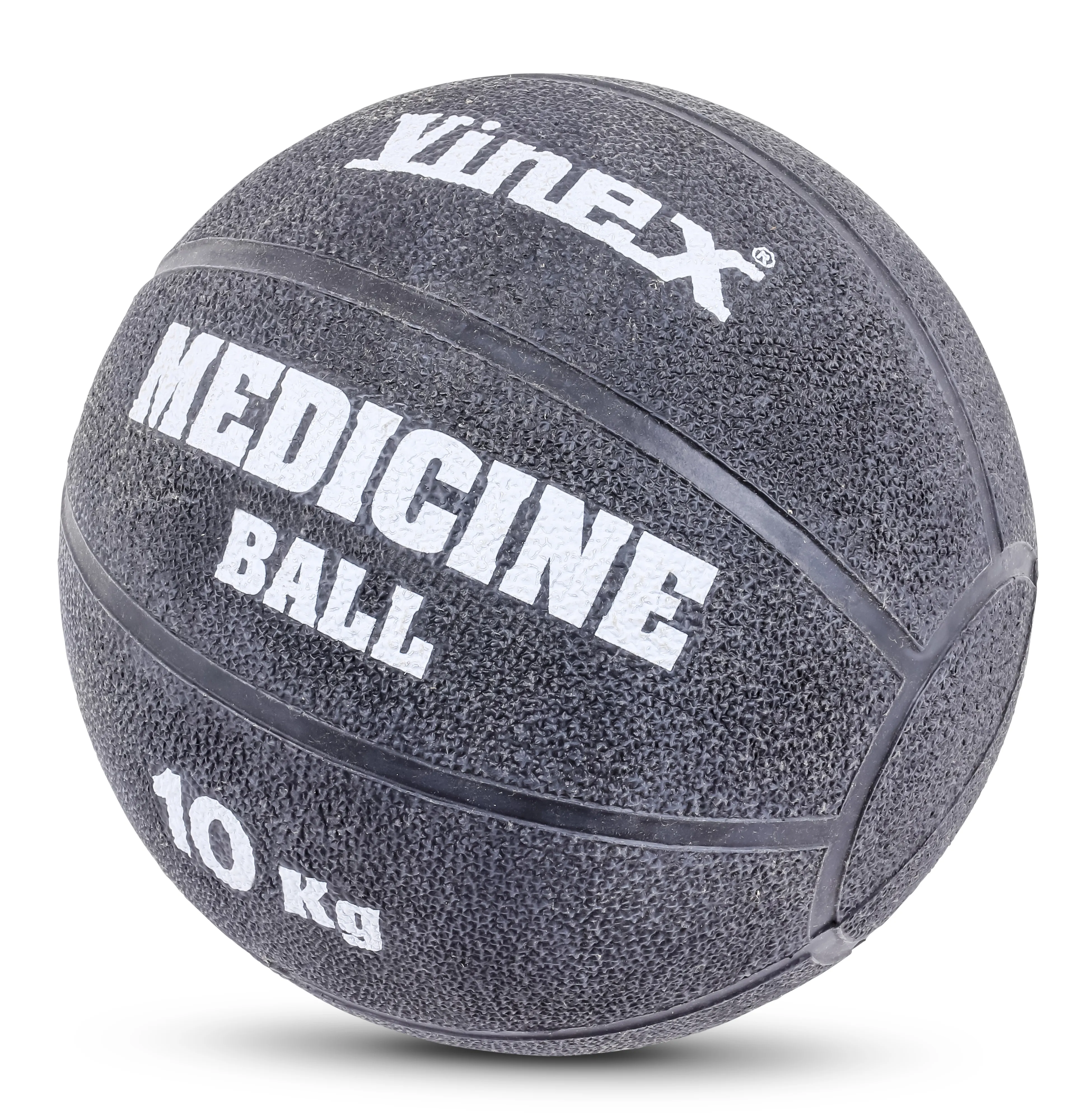
Rubber medicine balls are equipped with a valve that can be adjusted to determine how much bounce the ball has. This is useful for fitness and strength training of all kinds. The non-slip surface ensures that the ball can still be gripped easily, even under very wet conditions. These medicine balls are well suited for club sports, school sports, or home training in the weight room.
Medicine balls made from synthetic material

Synthetic medicine balls are made from a special kind of synthetic material, which is particularly abrasion-resistant. The pin valve allows the ball to be easily inflated.
Medicine balls made from leather

The classic leather medicine balls have proven themselves to be sturdy and shape-retaining and are available in a variety of different sizes and weights. Filled with unique moisture-resistant granules, these medicine balls also have cushioning properties to ensure training is easy on the joints.
Exercises with the Medicine Ball
With medicine balls available in many different weight categories, they offer infinite possibilities for exercises to improve muscle strength. A well-known exercise is the torso rotation, which strengthens the torso muscles including the lateral abdominal muscles. To do this, stand with your legs hip-width apart and hold the ball in front of you with your arms outstretched. Turn the ball from one side of the body to the other. Beginners should start with the 2 kg medicine ball.

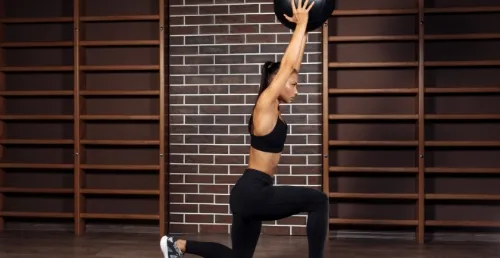
Balance can also be improved with exercises using the medicine ball. Again, there are many exercises in this area, one being the Single Leg Deadlift. To do this, bend the upper part of your body forward while standing. Hold the ball in front of you with both hands and extend one leg backward. Return the ball to the floor, while remaining in this position, then lift again. Change to the other leg.
Many clubs use medicine balls as a part of their warm-ups, as they are great for specialized basketball, handball, and volleyball techniques. They can help to train throwing strength, speed, energy, and coordination. For example, the medicine ball can be thrown over the head towards a wall in front.


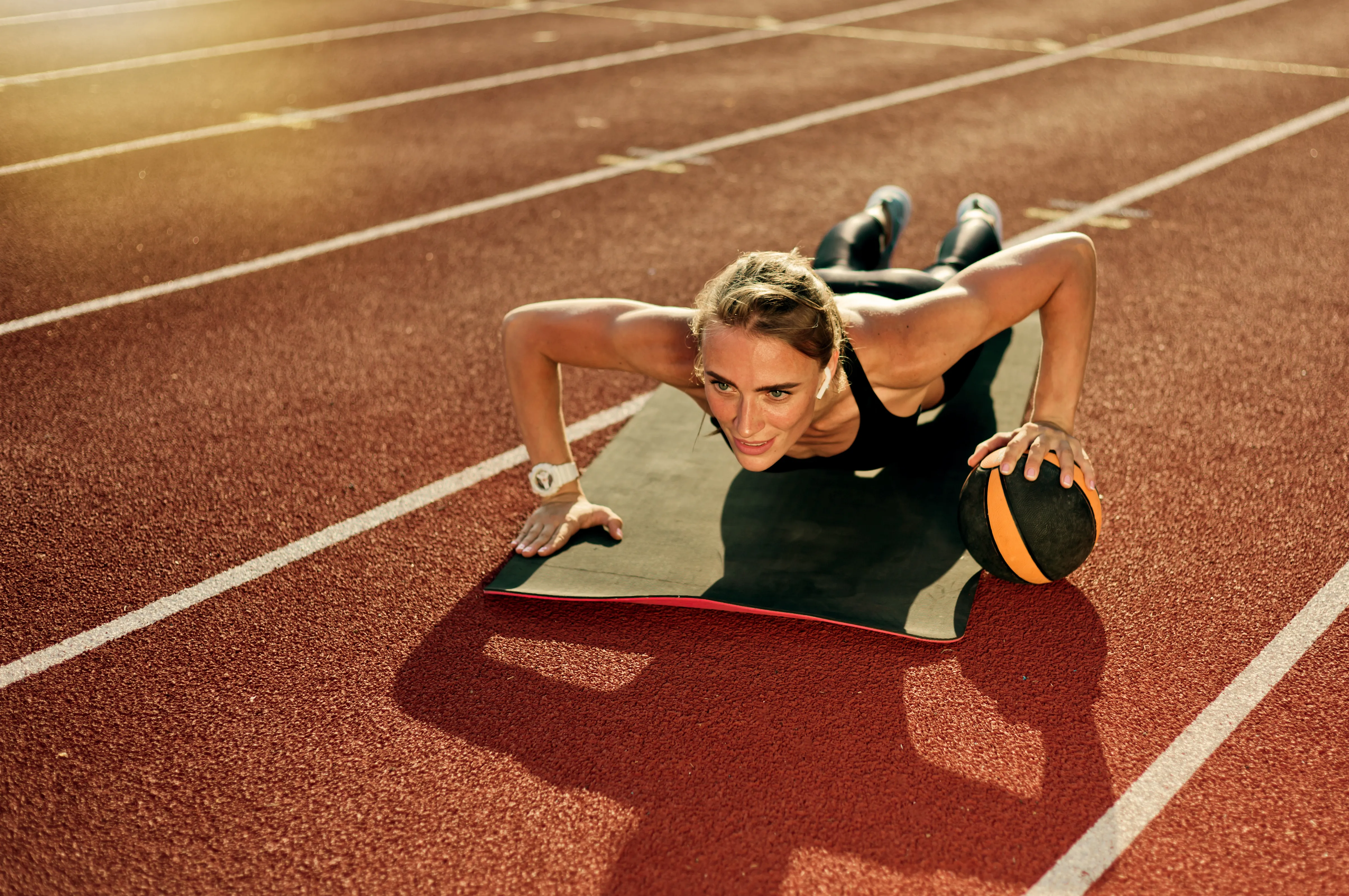
The simple act of throwing the medicine ball causes the torso to rotate. This straightforward movement trains the finger and arm muscles, as well as the torso muscles, the lateral muscles, and the abdominal muscles. Squats strengthen the gluteus maximus and quadriceps. Push-ups using the medicine ball build up the torso, chest, and arms. A medicine ball can be used to create a varied training program.
Medicine Ball Exercises for Athletics
Many factors will influence the kinds of medicine ball exercises recommended to different athletes. The spectrum of possibilities is vast. On the one hand, more advanced athletes can use the medicine ball as a tool to supplement their training and use it as a means of practicing more general throwing techniques. Alternatively, athletes can use the medicine ball as a part of more discipline-specific exercises, such as improving consistency and power by throwing the ball repeatedly against a wall. The weight of the ball chosen is based on the individual, the exercise, the season, and, of course, the aim of the training session. During the winter months, exercises with the medicine ball are likely to be used more often and incorporated into circuit training. A well-rounded athletic training without a medicine ball is unthinkable.
Buying a Medicine Ball - which one?
You’ve decided to buy a medicine ball but are unsure as to which model is the right one for you? In our table below you can see the different weights and materials of all of our medicine balls.
| WEIGHT | Type of Medicine Ball |
|---|---|
| 800 g | Rubber, leather |
| 1 kg | PVC, rubber, leather, synthetic material |
| 1.5 kg | Rubber, leather, synthetic material |
| 2 kg | Rubber, leather, synthetic material |
| 3 kg | Rubber, leather, synthetic material |
| 4 kg | Rubber, leather, synthetic material |
| 5 kg | Rubber, leather, synthetic material |
| 6 kg | Rubber, leather, synthetic material |
| 7 kg | Rubber, synthetic material |
| 8 kg | Rubber, synthetic material |
| 9 kg | Rubber, synthetic material |
| 10 kg | Rubber, synthetic material |
| 11 kg | Synthetic material |
| 12 kg | Synthetic material |
FAQ
What is the diameter of a medicine ball?
Medicine balls come in different diameters for different types of exercise, according to weight and area of use.
How heavy should a medicine ball be?
The weight of the correct medicine ball is dependent upon many factors, for example, the kind of exercise, your current level of fitness, and if you have any injuries or issues that may hinder you physically. It is by no means the case that the bigger and heavier the ball, the more effective the training. You should approach the weights slowly. It often makes sense to start with a medicine ball of 1 to 2 kg and then slowly work your way up.
Which weight is suitable for a child?
Children regularly use medicine balls between 0.8 kg to 2 kg.