

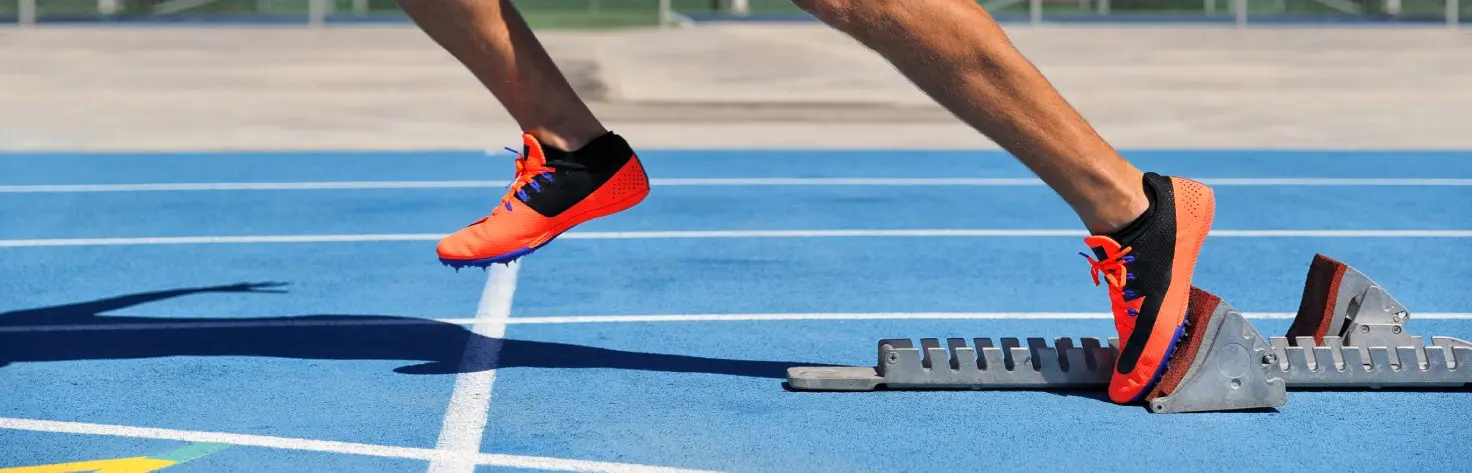
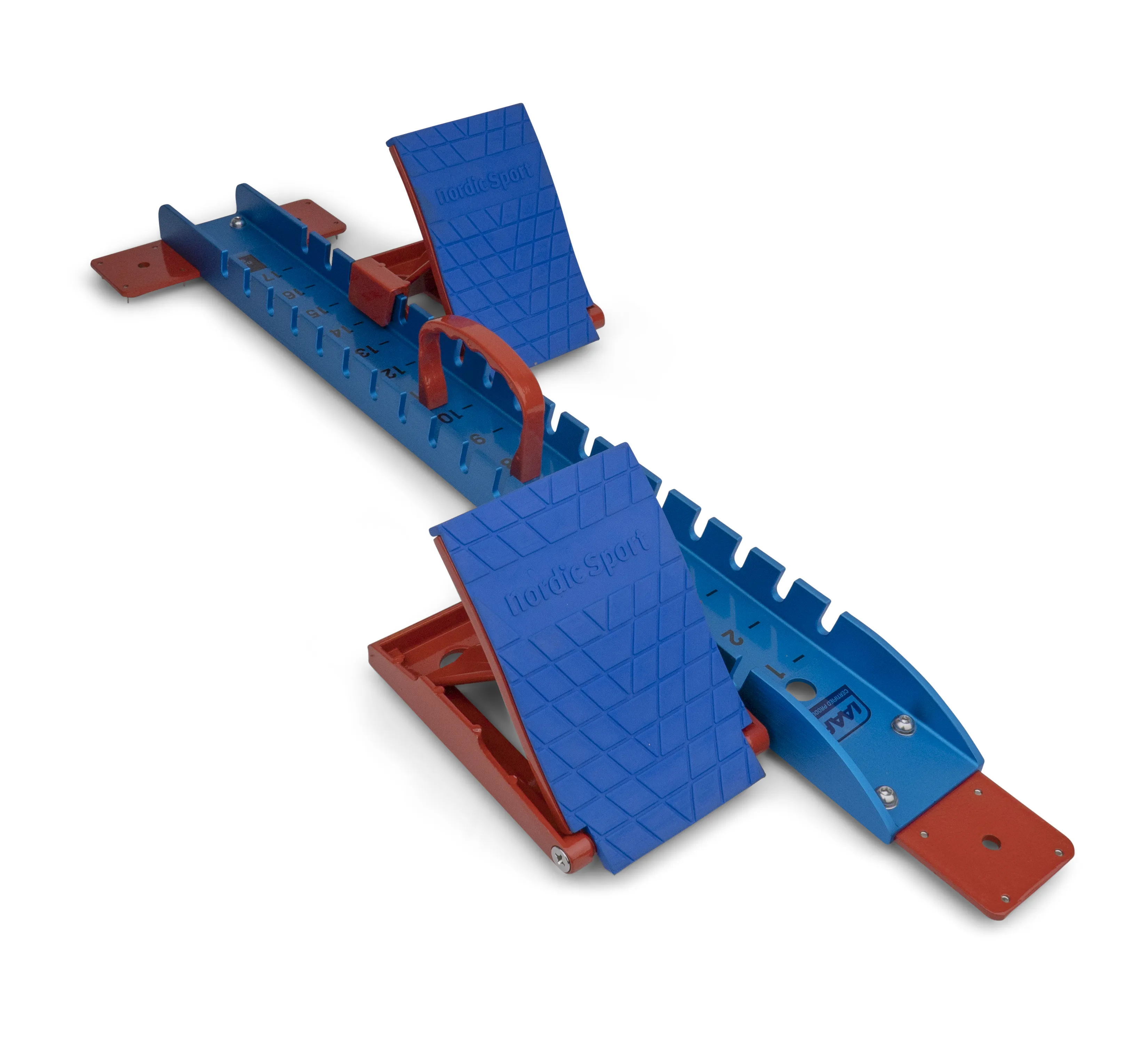
Starting blocks are available in a variety of different models and designs. A starting block's suitability for competition or training, the size of the pedals' surface area, the material of the starting block, and the block's certification by the World Athletics Federation are all factors that help to distinguish the starting blocks from one another. Additionally, they can also differ in their suitability for synthetic and cinder tracks. Starting blocks provide an athlete with a surface to push against with their feet at the start of a race, preventing them
from slipping as they launch their bodies forward. Starting blocks are also sometimes referred to as starting or launching rails and are used across many disciplines, for example, international competitions and school sporting events. Starting blocks have been used in competitions by the World Athletics Federation since 1937. Before this, athletes would dig holes into the surface of the running track to create a space to position their feet, which would prevent them from slipping. To buying guide »
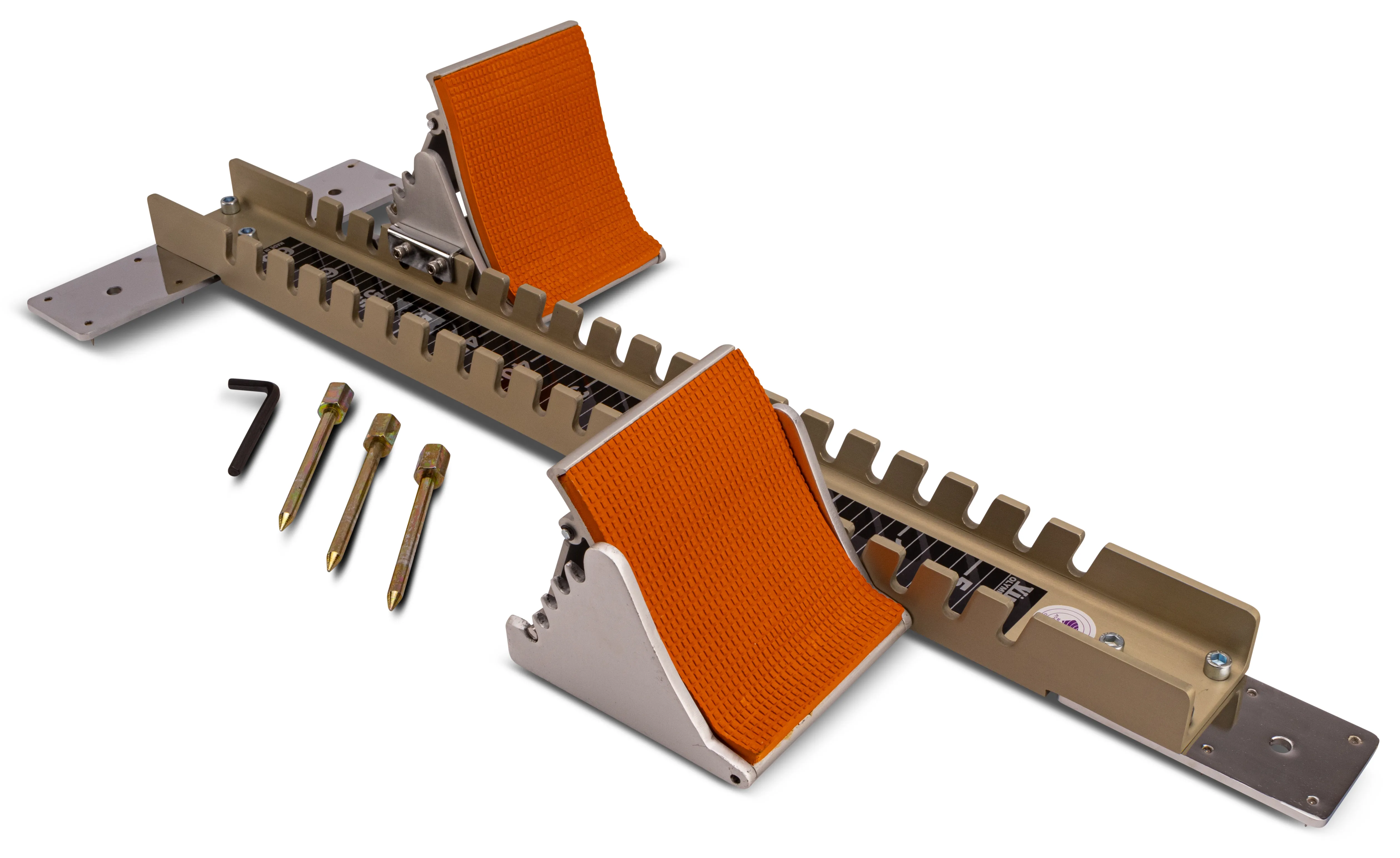
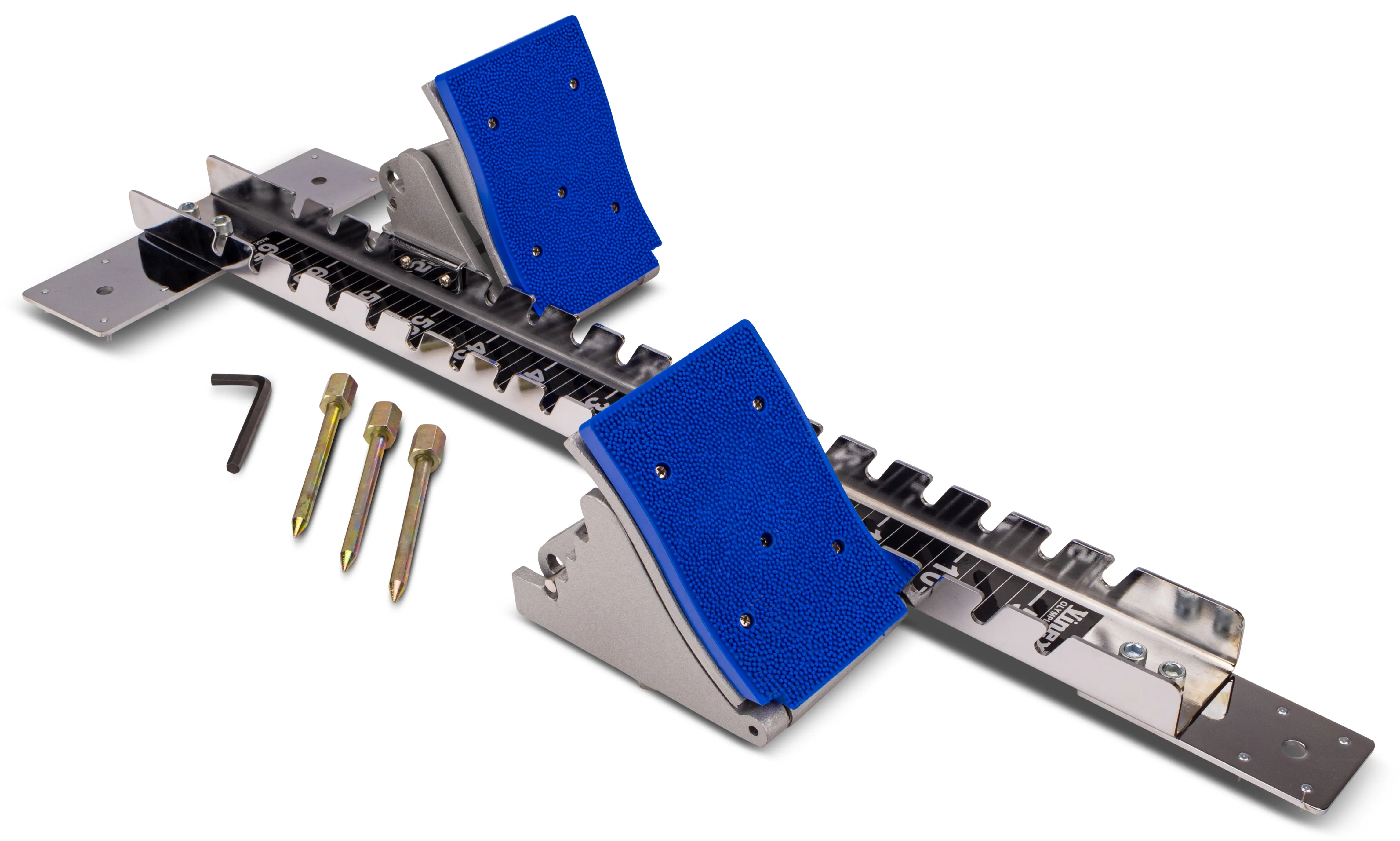
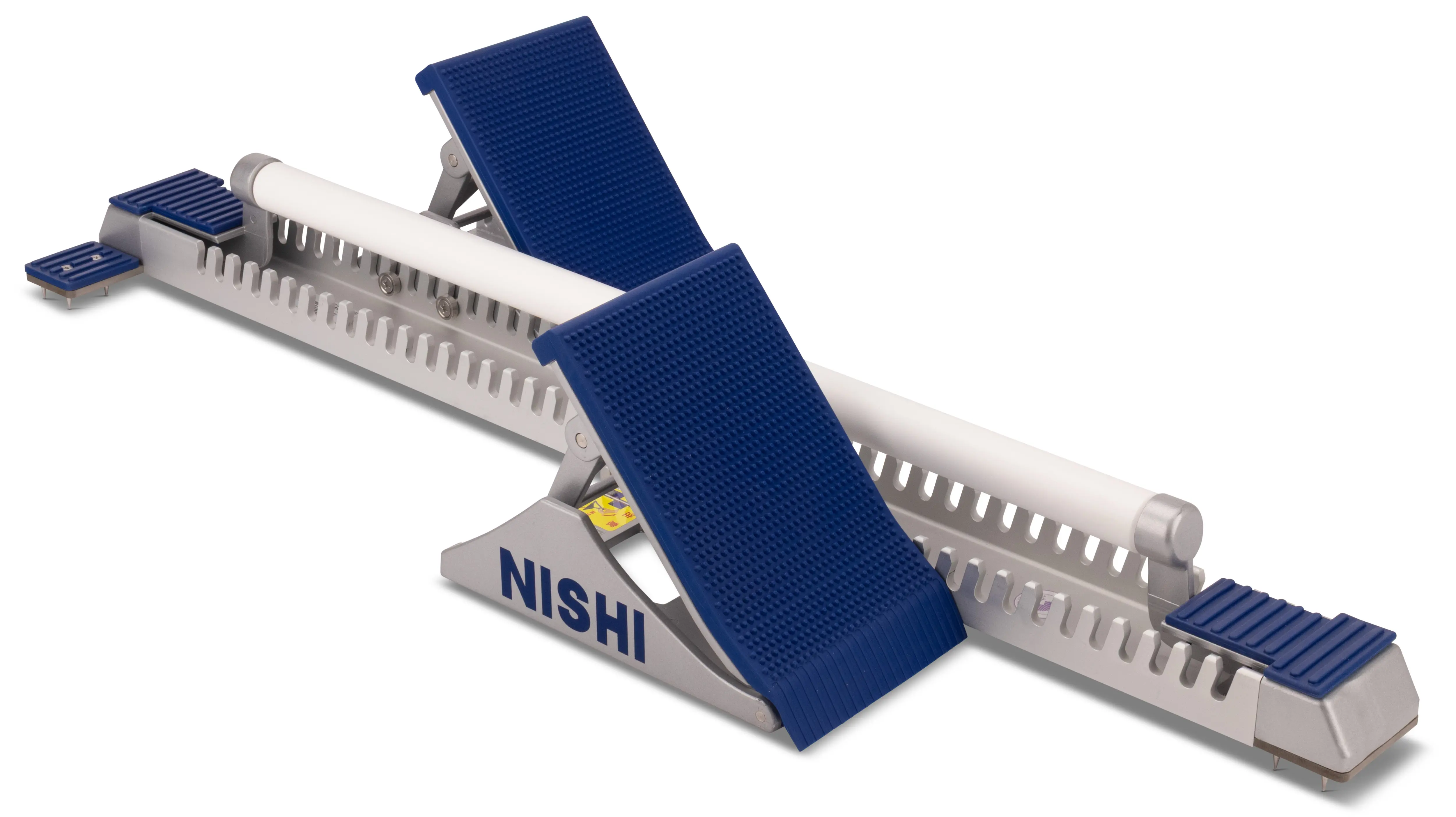
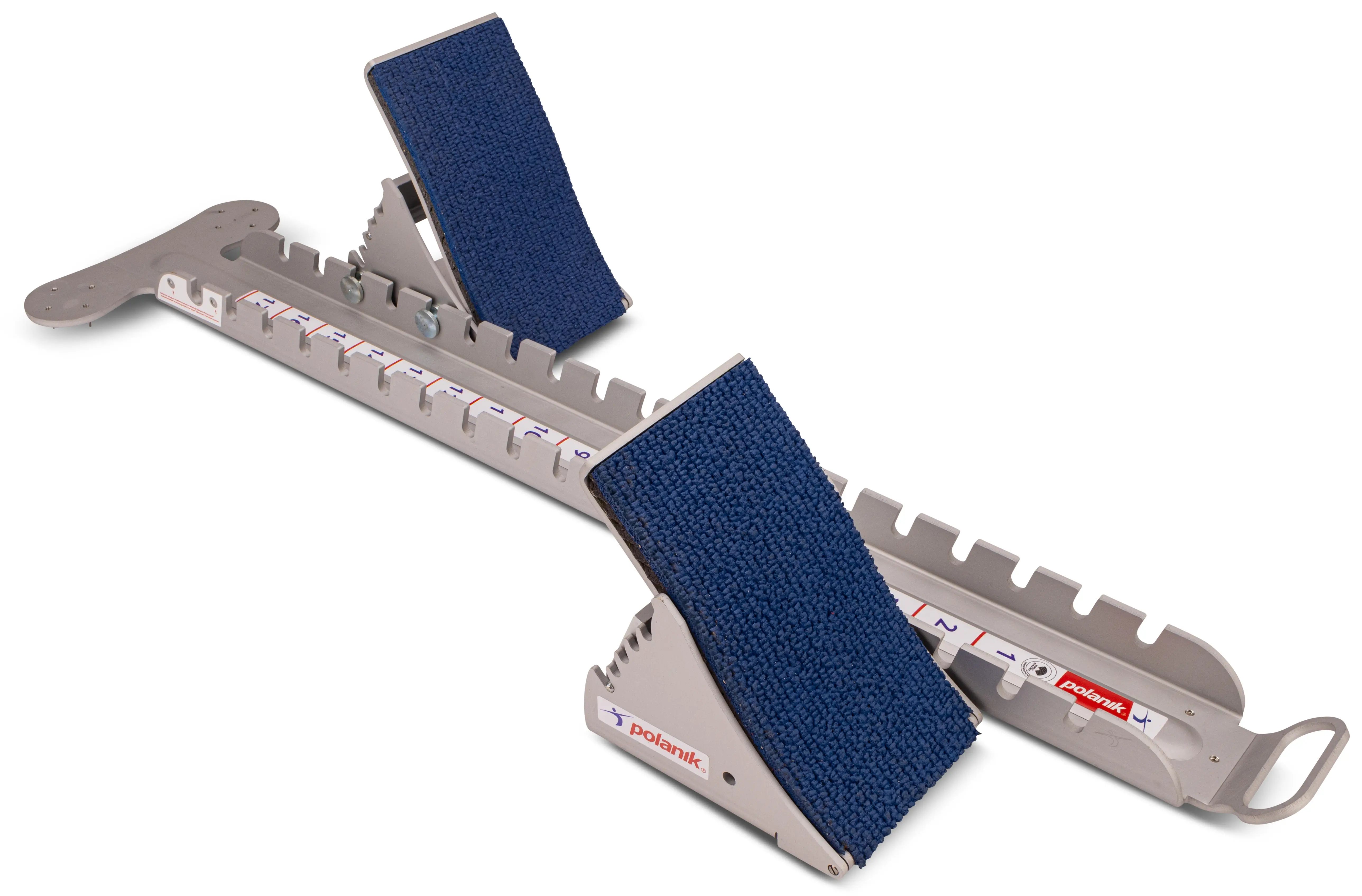
Discover more products for better sprint training

Functions of Starting Blocks
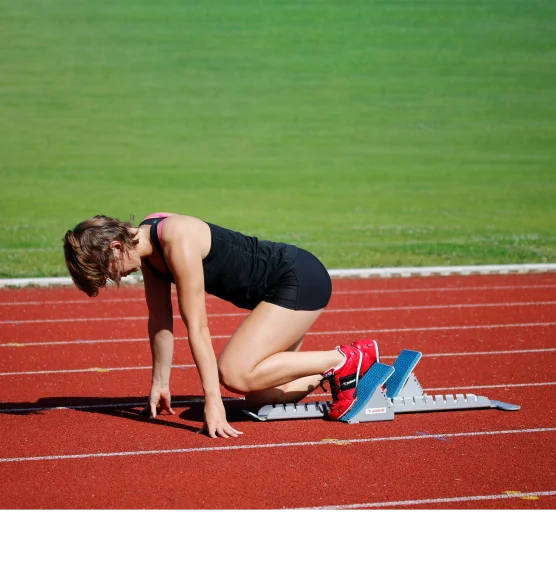
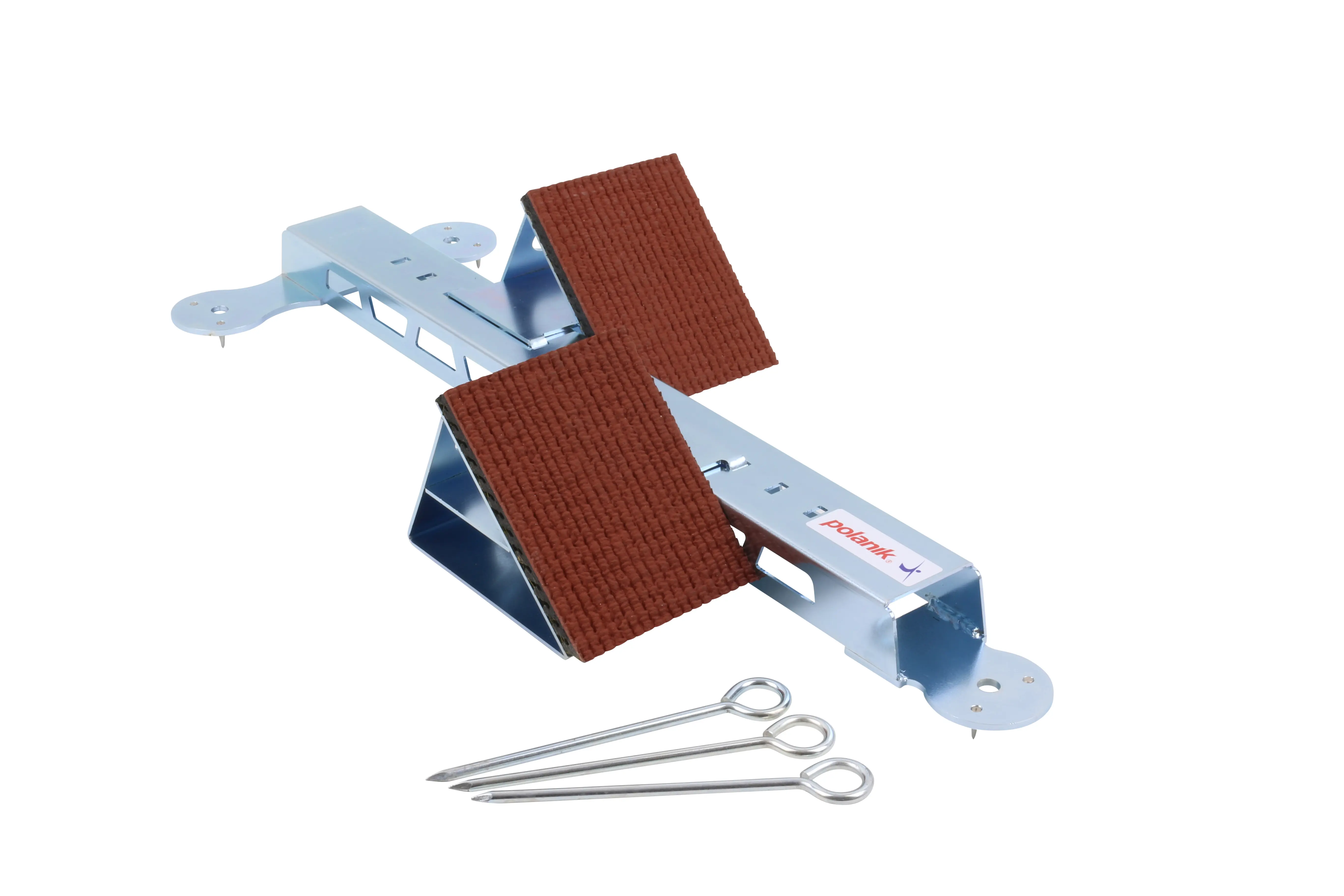
A starting block provides a powerful take-off for the athlete at the start of a race and, consequently, a higher acceleration at the beginning of the sprint. Starting blocks are only used for sprints of up to 400 meters. Athletes start in an upright position for races of distances longer than this.
Areas of Use for Starting Blocks
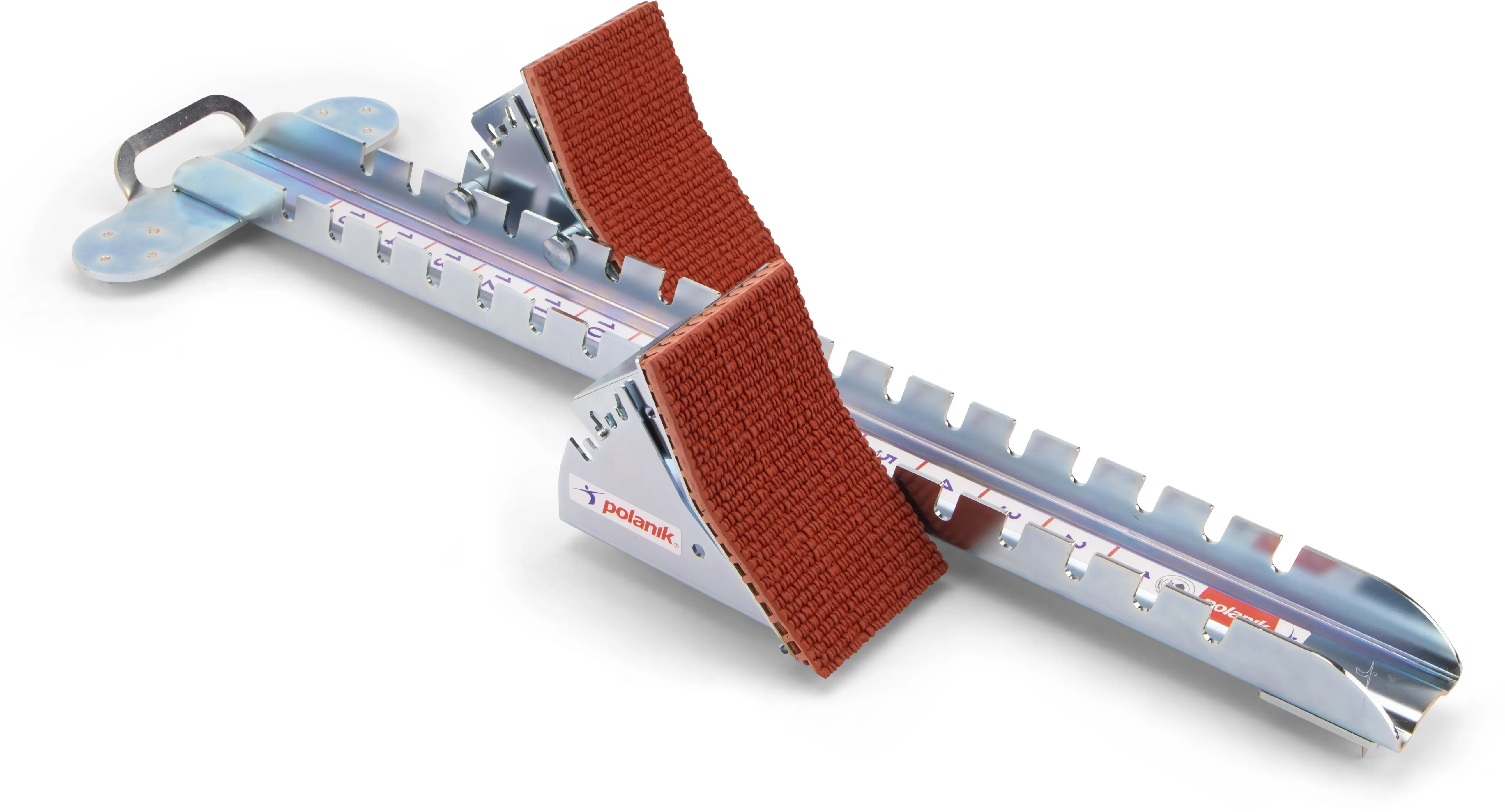
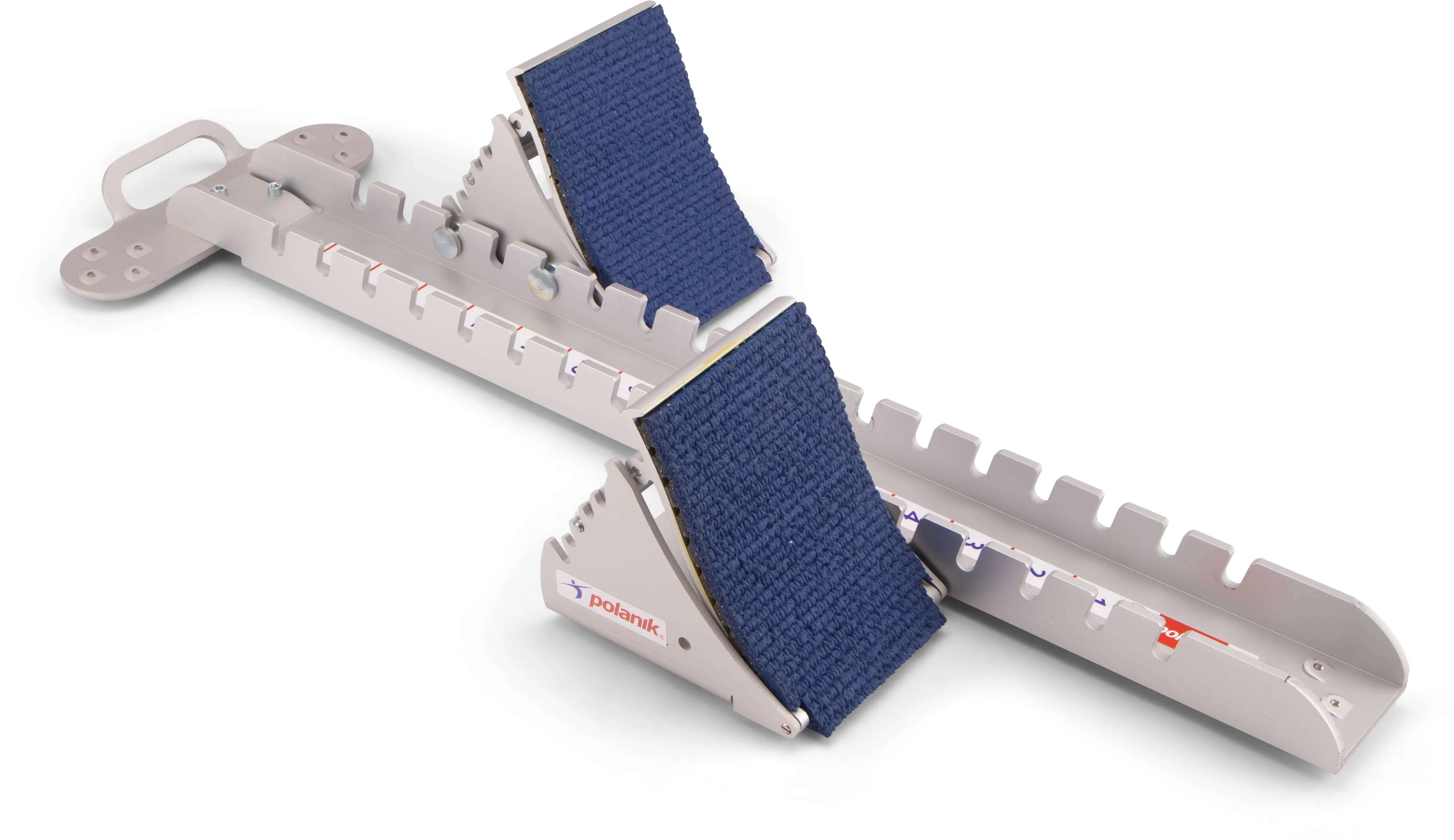
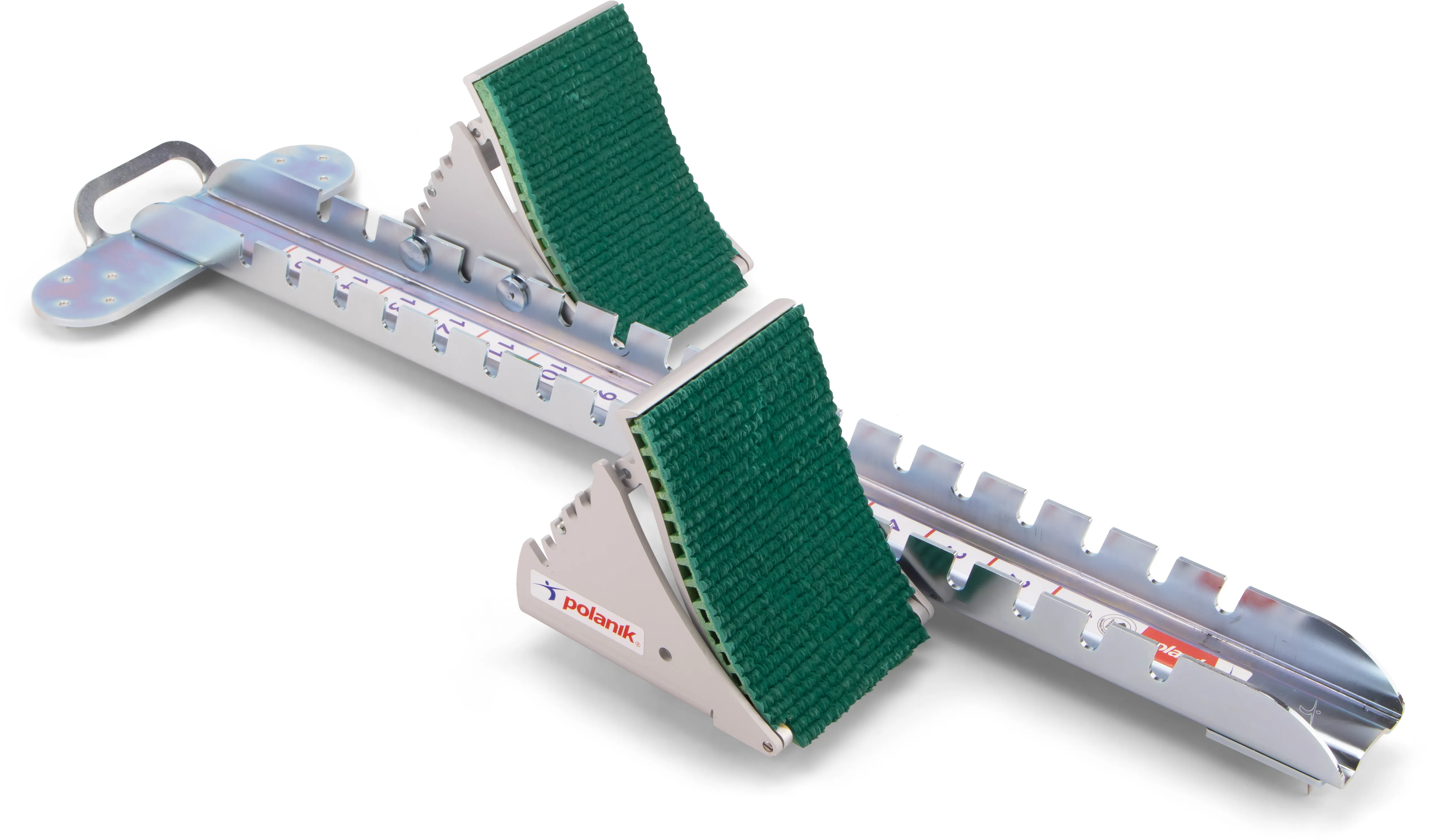
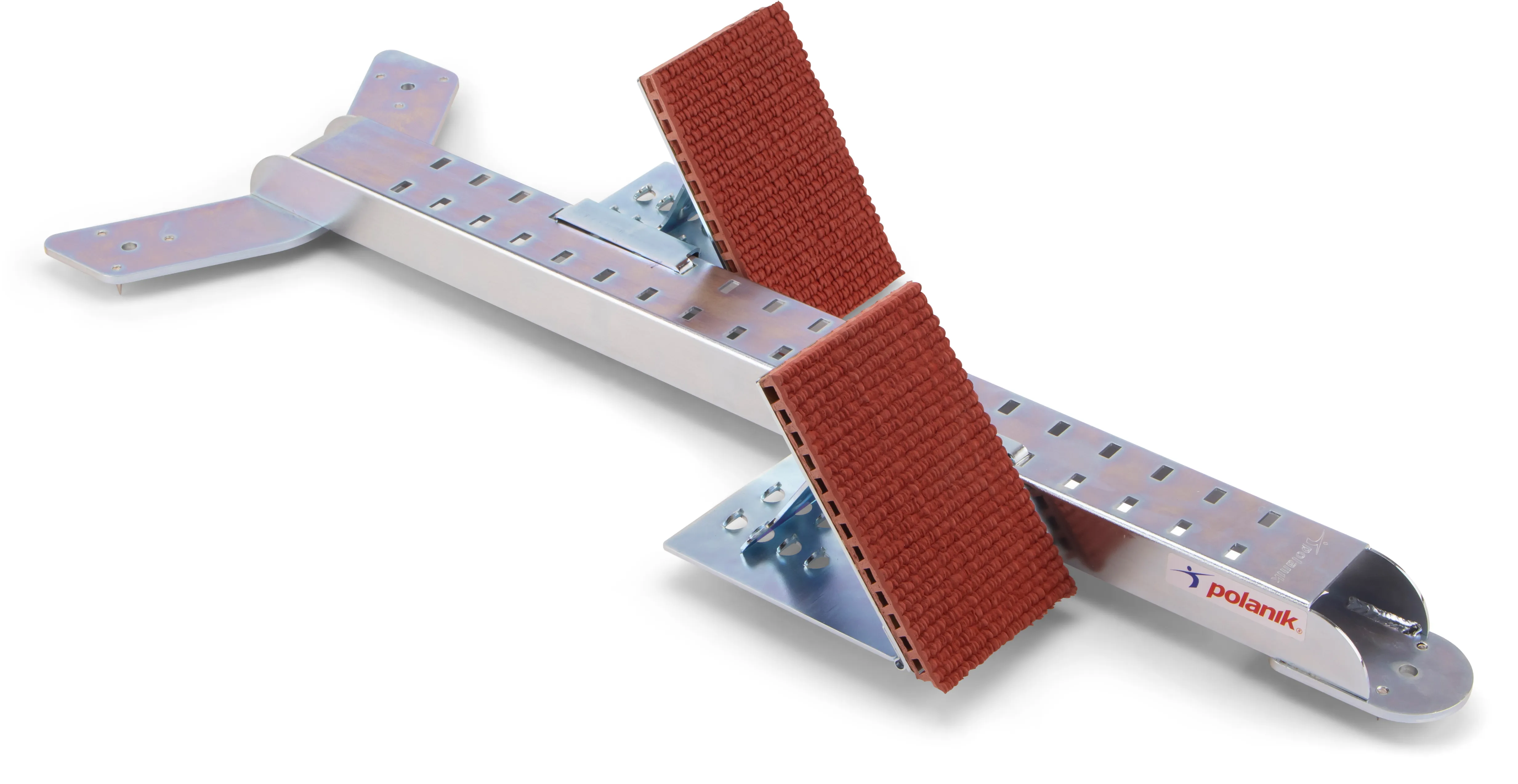
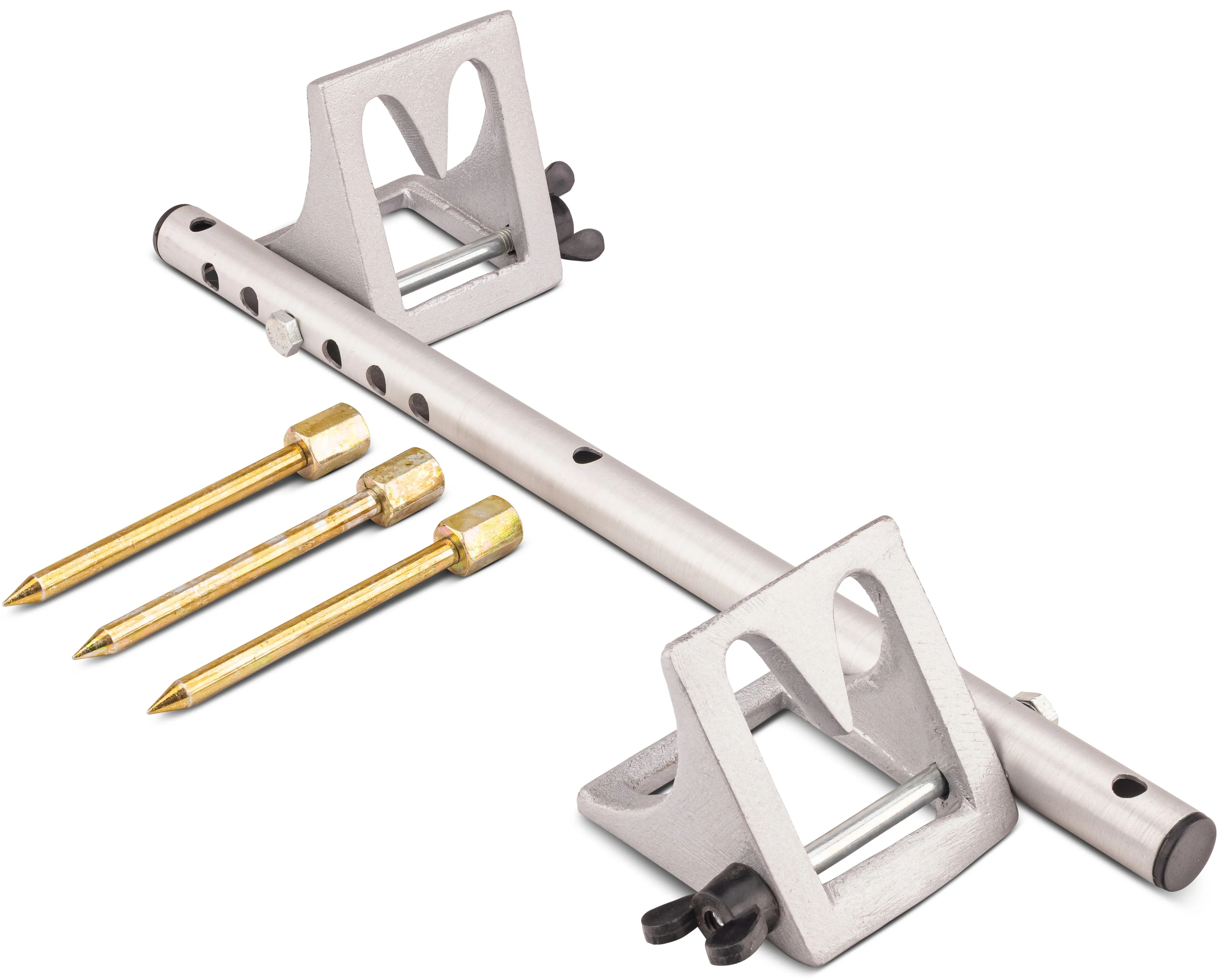
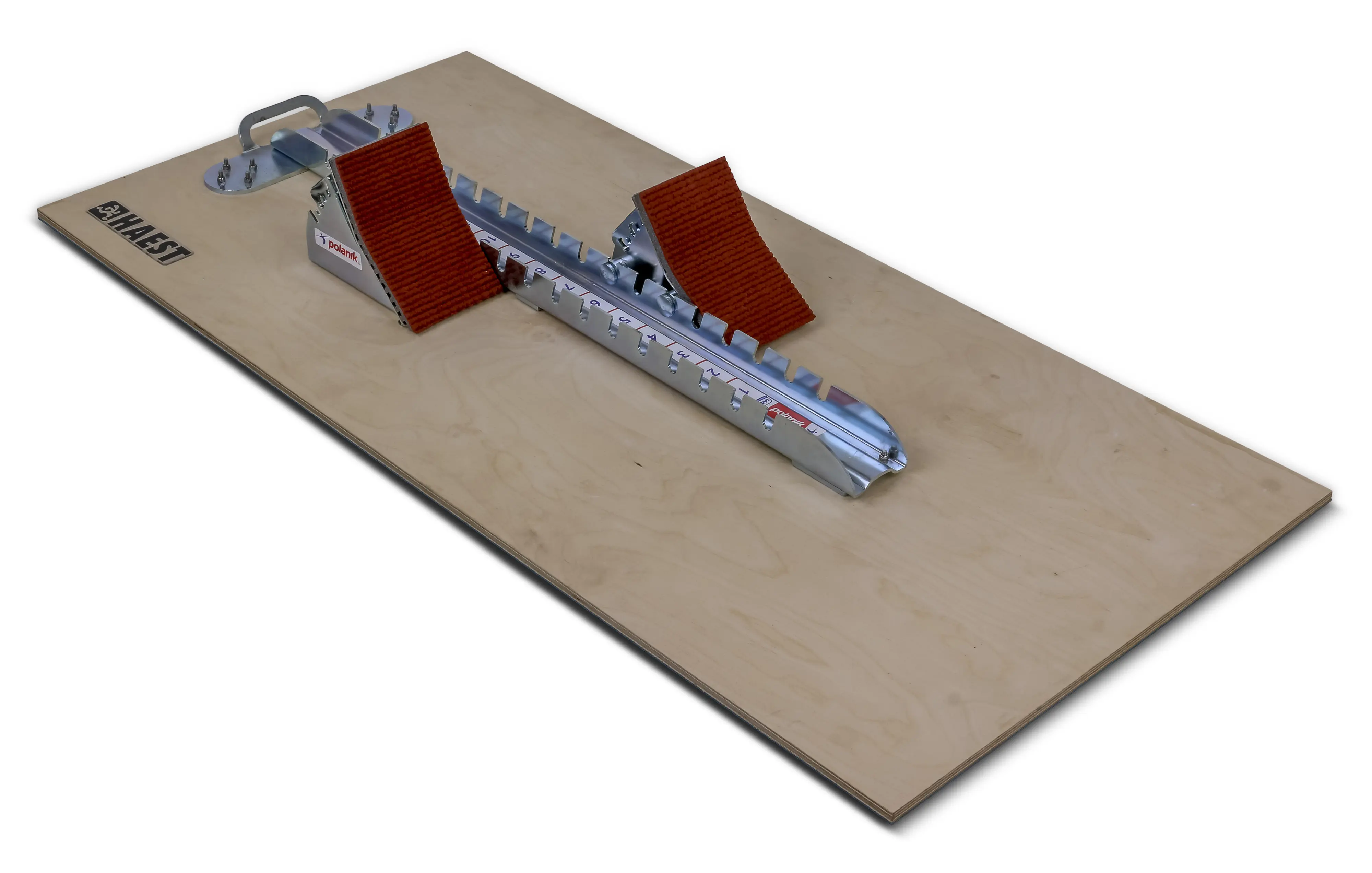
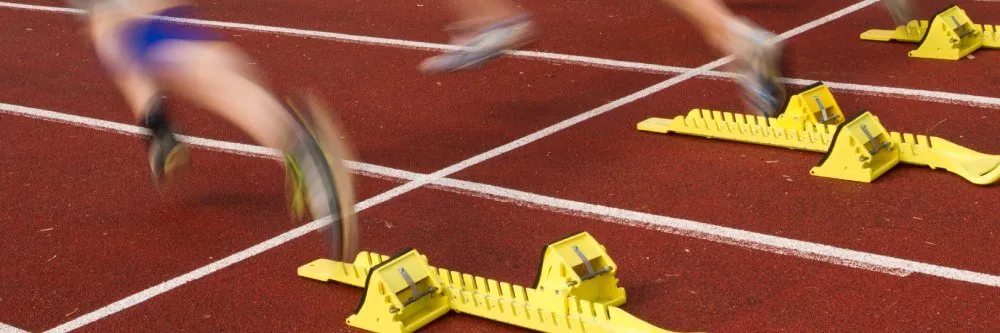
Starting blocks are made of three different elements: the spine, the front block, and the back block. The front or the back block consists of a repositionable foot pedal that can be adjusted for each athlete. The starting block must be securely fixed into the track to ensure it does not slip during use. Ground pegs can be used to fix a starting block to a cinder track whereas special spikes are available for synthetic tracks.
Indoor starting blocks come complete with an anti-slip underside that prevents the block from moving.
Using a Starting Block in Schools
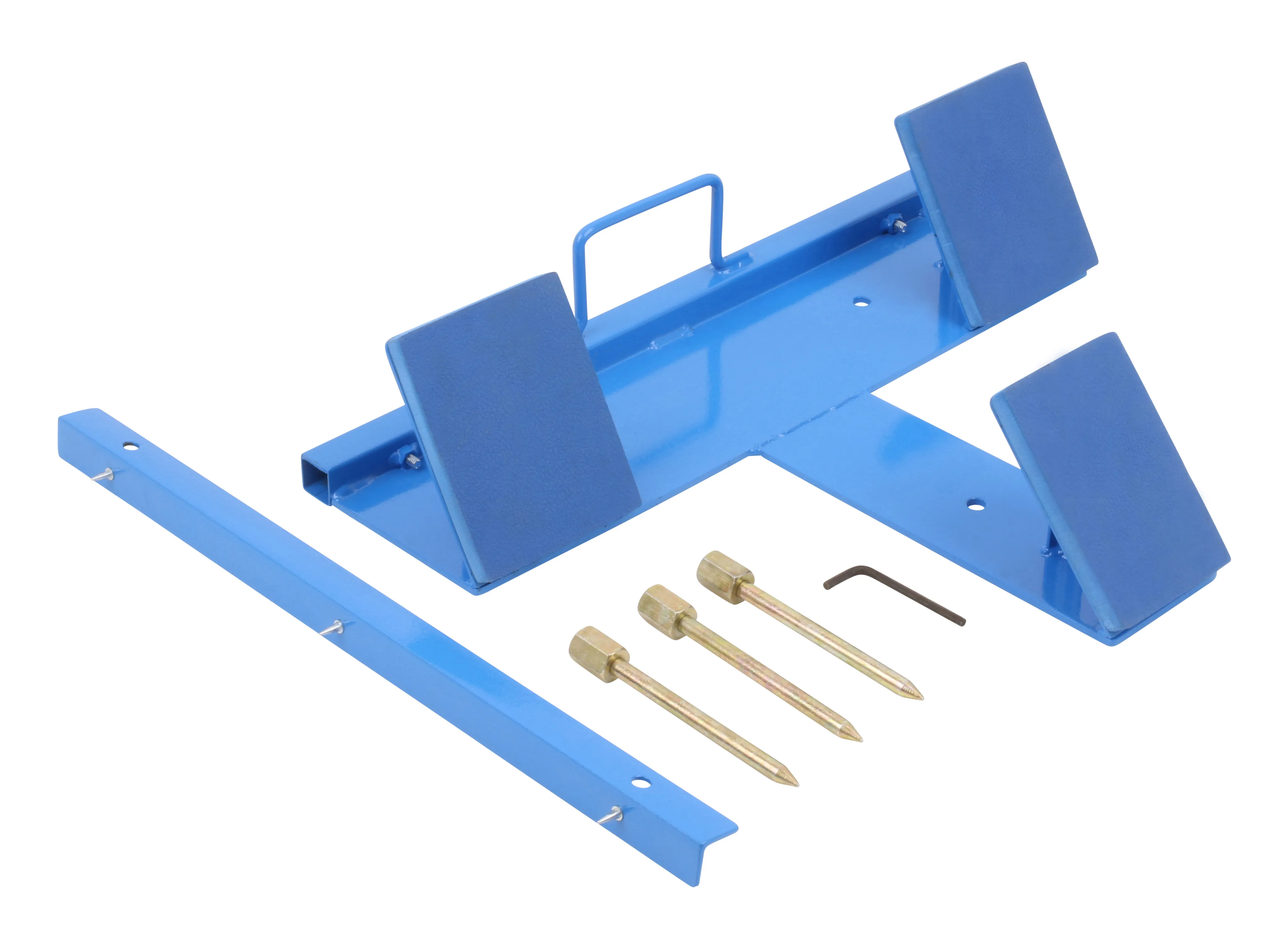
The requirements of a starting block for a primary school sports lesson are very different from that of a professional athletics competition. With this in mind, Polanik has developed the PBS14-B, specifically for use in school sports lessons. This starting block is particularly advantageous as it prevents the front and back pedals from being placed too close together. By preventing a counterproductive positioning of the feet, this starting block forces a child to adopt the correct stance and technique from the very beginning of training. There is no chance to form bad habits concerning how the feet are positioned because the starting block will simply not accommodate them. The PBS14-B from Polanik is a great choice for schools.
Combining a Starting Block With False Start Systems
A number of our competition starting blocks can be combined with false start systems making them suitable for high-level competitions. If you're on the hunt for high-caliber starting blocks then our Polanik PBS17-02 with standard pedals or high-set pedals or Polanik PBS14-04 Premium Starting Block are a perfect choice.
Starting Blocks for Indoor Use
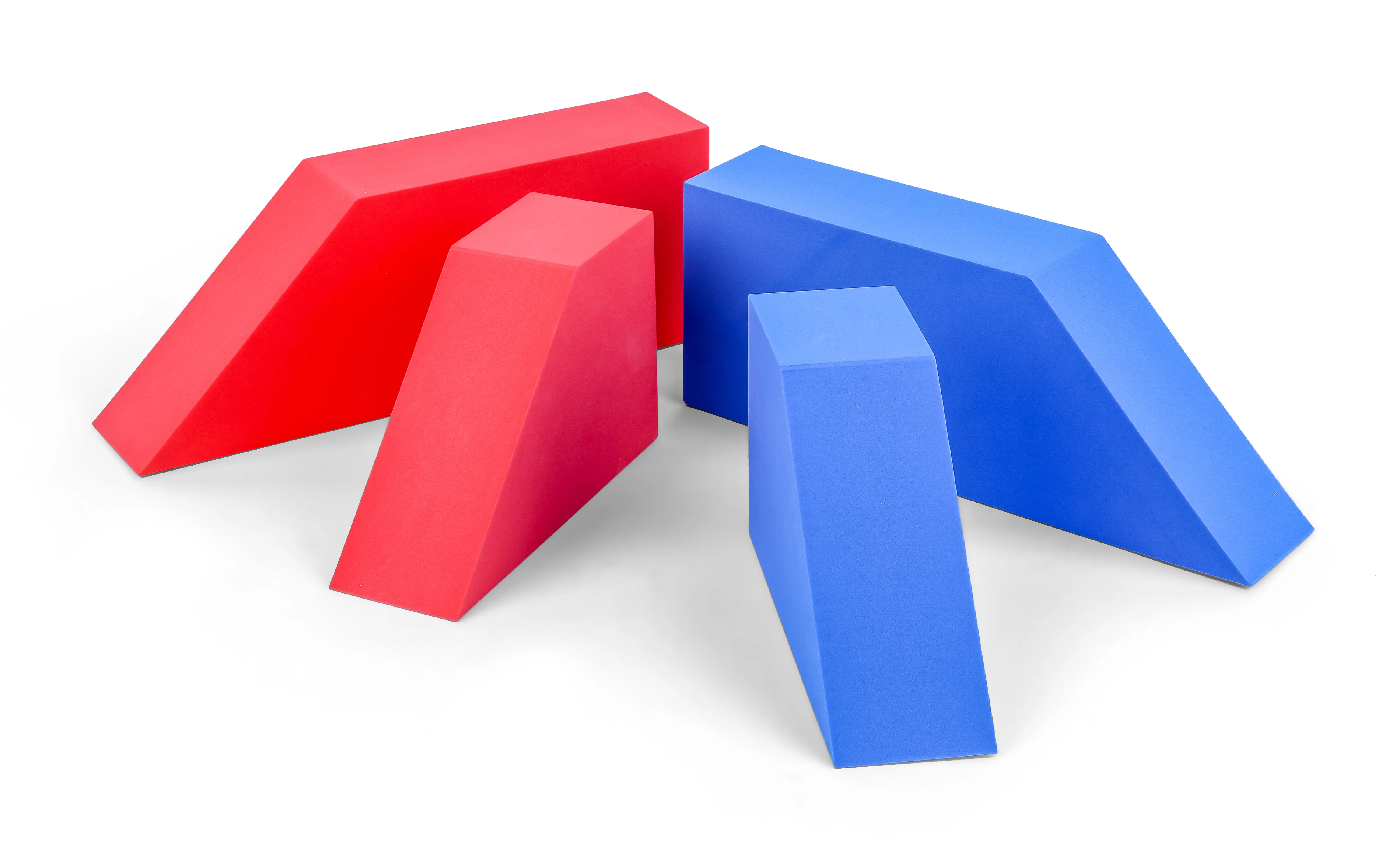
Alongside the typical starting blocks for athletics tracks, there are also specially designed starting blocks for indoor use. These are available in a variety of models. Some are secured by being pushed against a stationary object. To meet the highest of demands, we have developed an exceptional piece of equipment for use on indoor surfaces. These starting blocks can simply be placed on the floor and require no form of anchoring or securing. This gives you the flexibility to practice and train professional sprint starts whilst in the school gym.

Standard Pedals v. High-Set Pedals
In the last few years, high-set pedals have become increasingly popular. These pedals have a particularly high surface area upon which the athlete can push against to launch themselves into a run. They are particularly well-loved in competitive sports as they give the athlete a powerful start. However, opting for high-set pedals doesn't always make sense. When training with children or teenagers starting blocks with a standard pedal is often the better choice. Starting blocks with high-set pedals can even be a disadvantage for children. In the professional world, however, high-set pedals have become the norm. Athletes should practice with these kinds of pedals in training to better prepare themselves for using them in competitions.
Material and Weight
In earlier times, it was often said the heavier the starting block, the better. That has long since been an outdated quip. We offer starting blocks made from steel and aluminum to provide a wide range of starting blocks ready for shipping. Aluminum starting blocks do not rust, thereby making them a great choice for damper conditions. If salty sea air is an issue, take a look at our OceanBreaker Set, which converts Polanik's aluminum starting blocks
to a rust-proof option. Included in the set are stainless steel alternatives to the small galvanized steel components typically used in starting blocks. Cheaper versions are often available but at least some of these elements are likely made from steel. There are also starting blocks that combine a steel rail with aluminum pedals.
Replacement Parts for Polanik Starting Blocks
If you already have a Polanik starting block, we can supply you with all of the necessary replacement parts you may require. For starting blocks of all manufacturers, we offer replacement rubber pads for pedals, which wear out over time and need to be replaced.
We can cut replacement pads precisely, down to the millimeter, to fit the size of your pedals. Pads come in turquoise, red, and green material, allowing you to keep your starting block colors uniform and consistent.
FAQ
How do I find the right starting block?
If you're looking for the right starting block, you're in the right place! We are happy to help and advise you when selecting your starting block, regardless of whether it's for use in competitions or training, on synthetic tracks, cinder tracks, or indoor use. We look forward to hearing from you!
How do I adjust a starting block?
Adjusting a starting block for use in track and field depends upon the size of the athlete. The stronger leg is positioned in the front block with the knee at an angle of 90 degrees. The back leg should be positioned in the back block at an angle of 110 degrees. The shoulders must be level with the starting line.
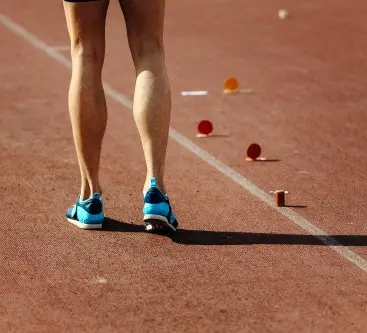
As well as starting blocks for sprinters, we also offer many other products for this discipline, including obstacles, hurdles and equipment for walking competitions.