

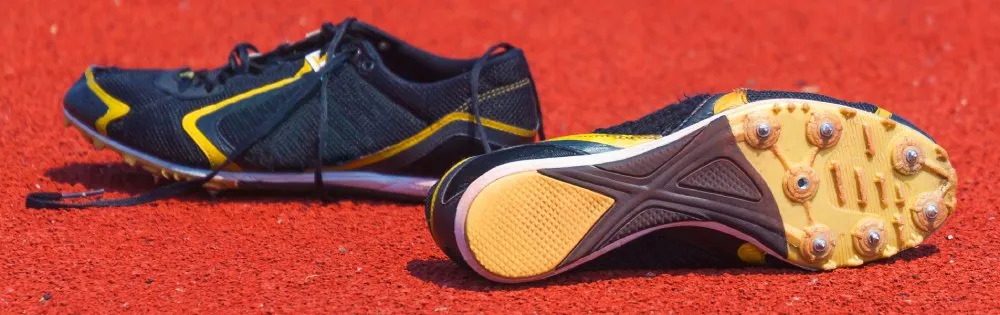
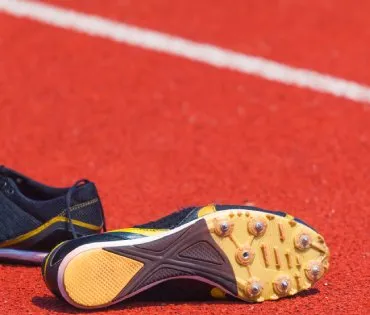
There is a wide variety of spikes available, but not every type is appropriate for every surface or athletic discipline. To maximize the benefits of the spikes, it is crucial to identify the optimal combination and understand how the different variants can impact performance.To buying guide »
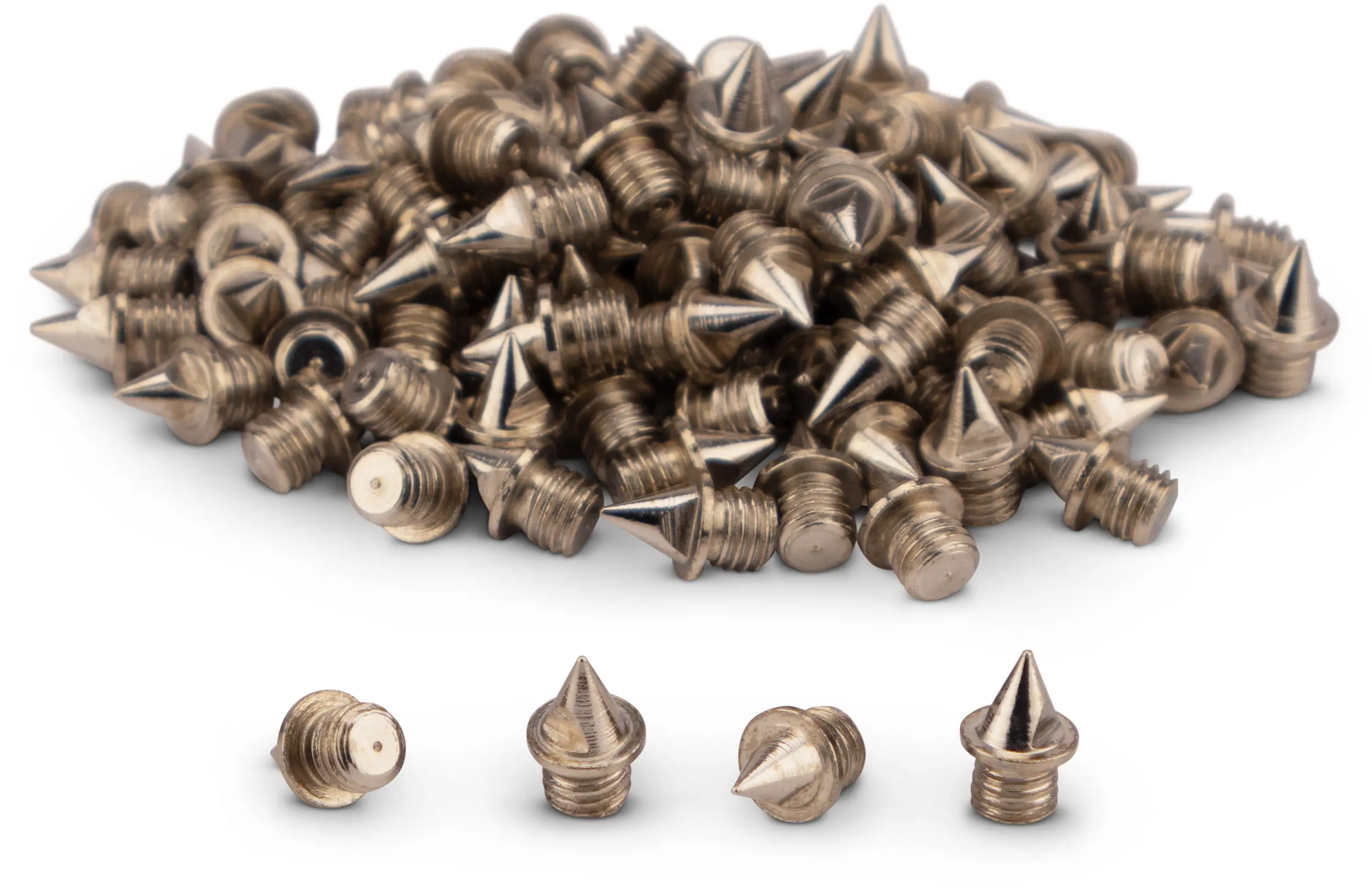
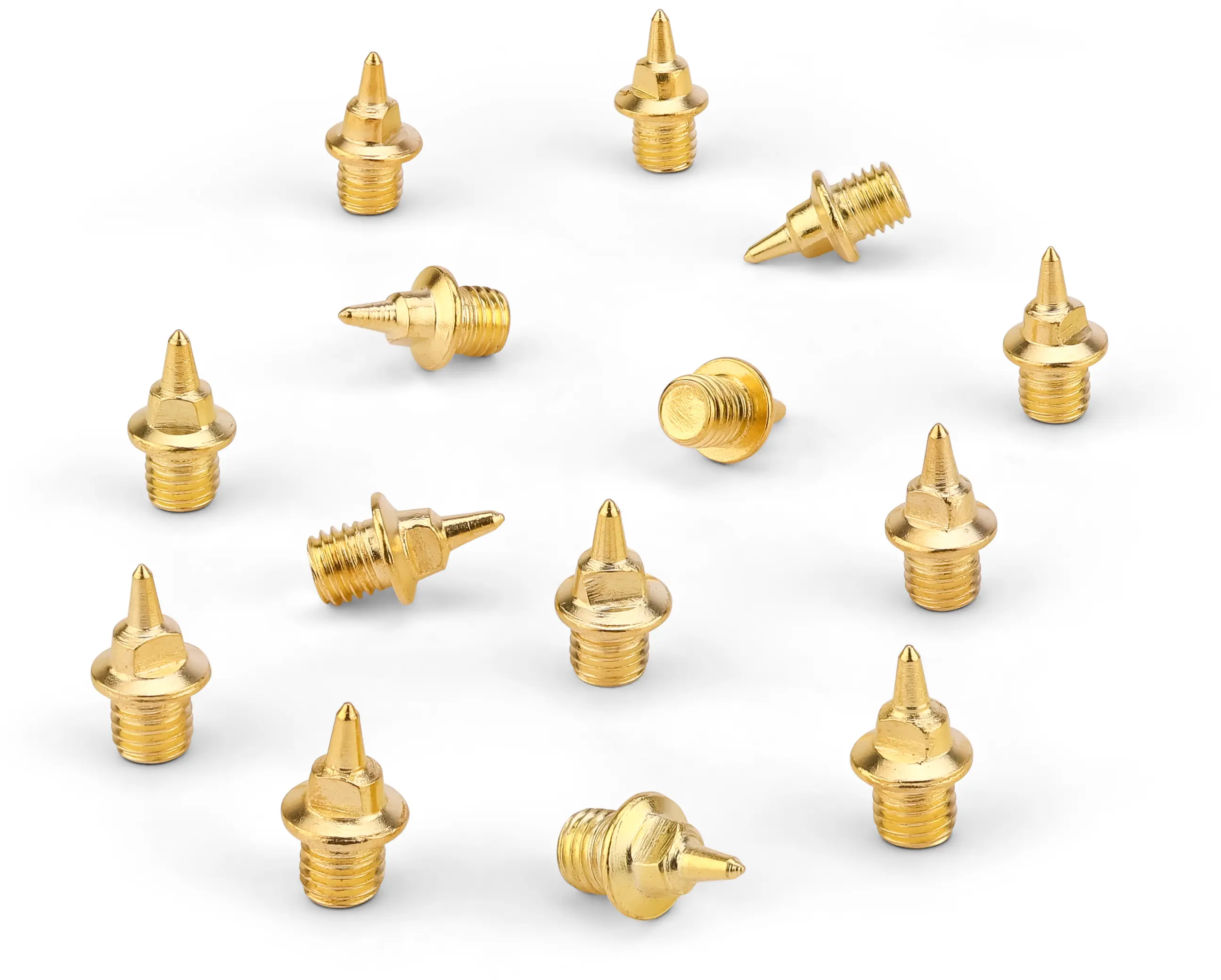
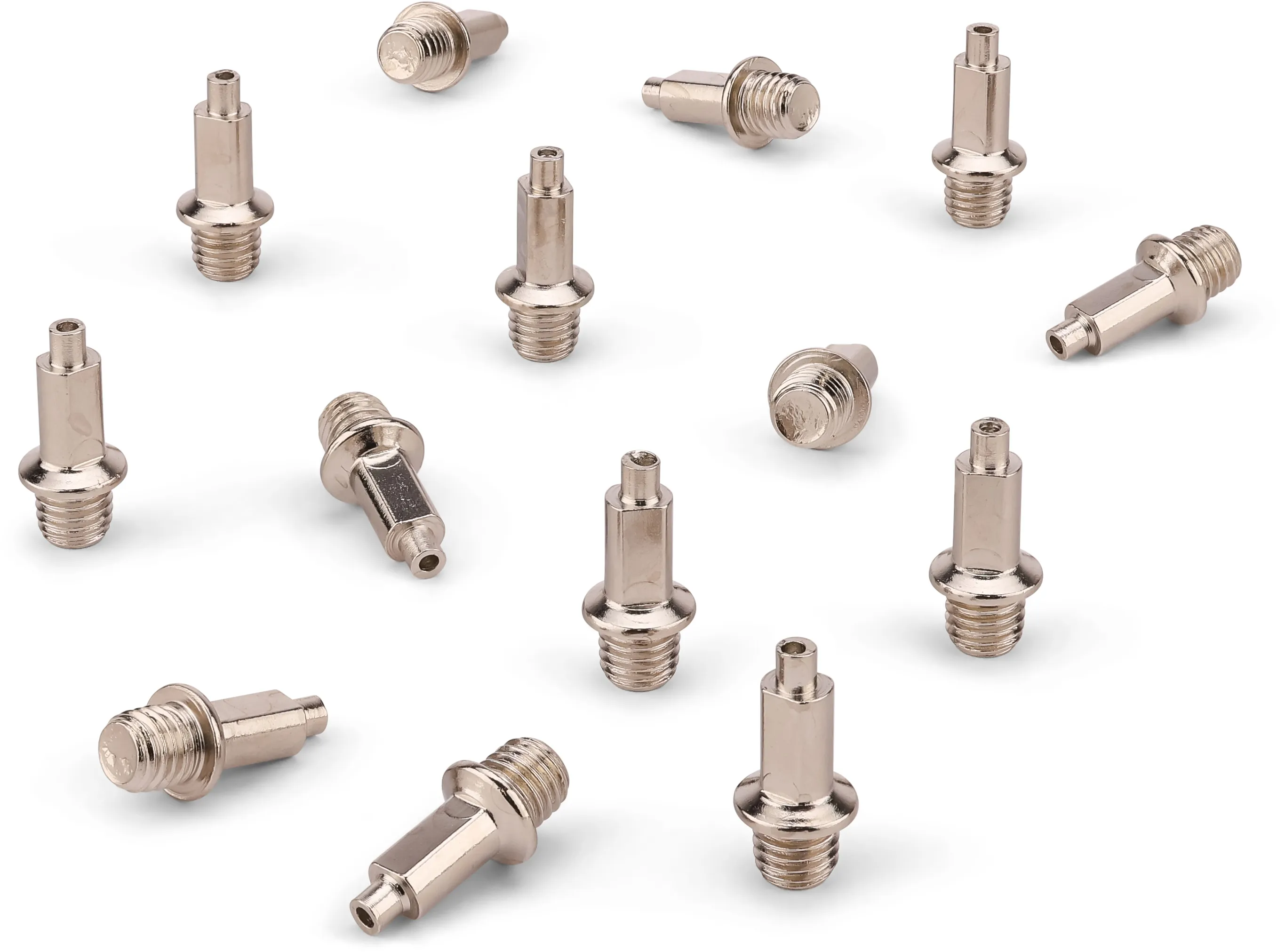
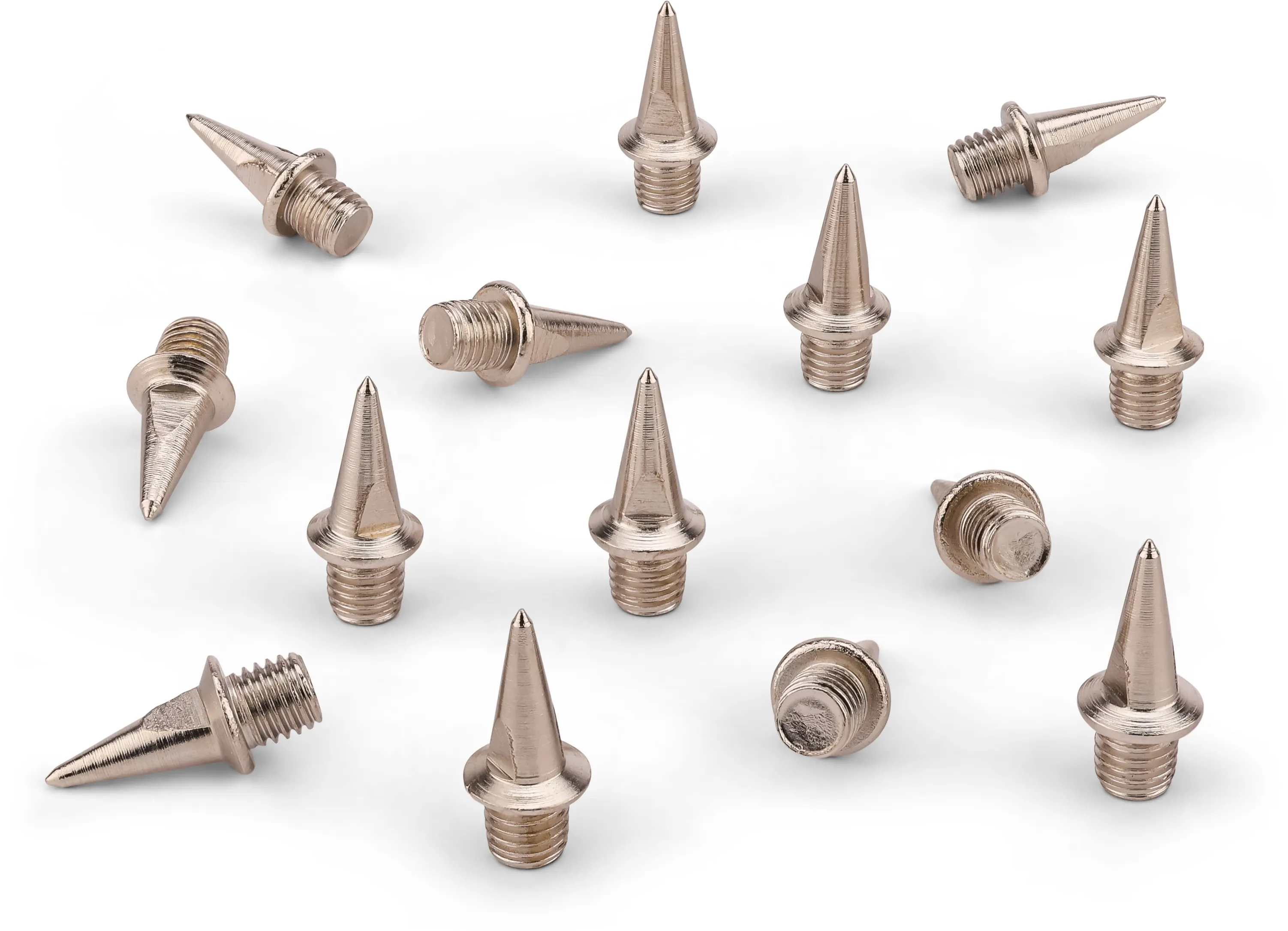
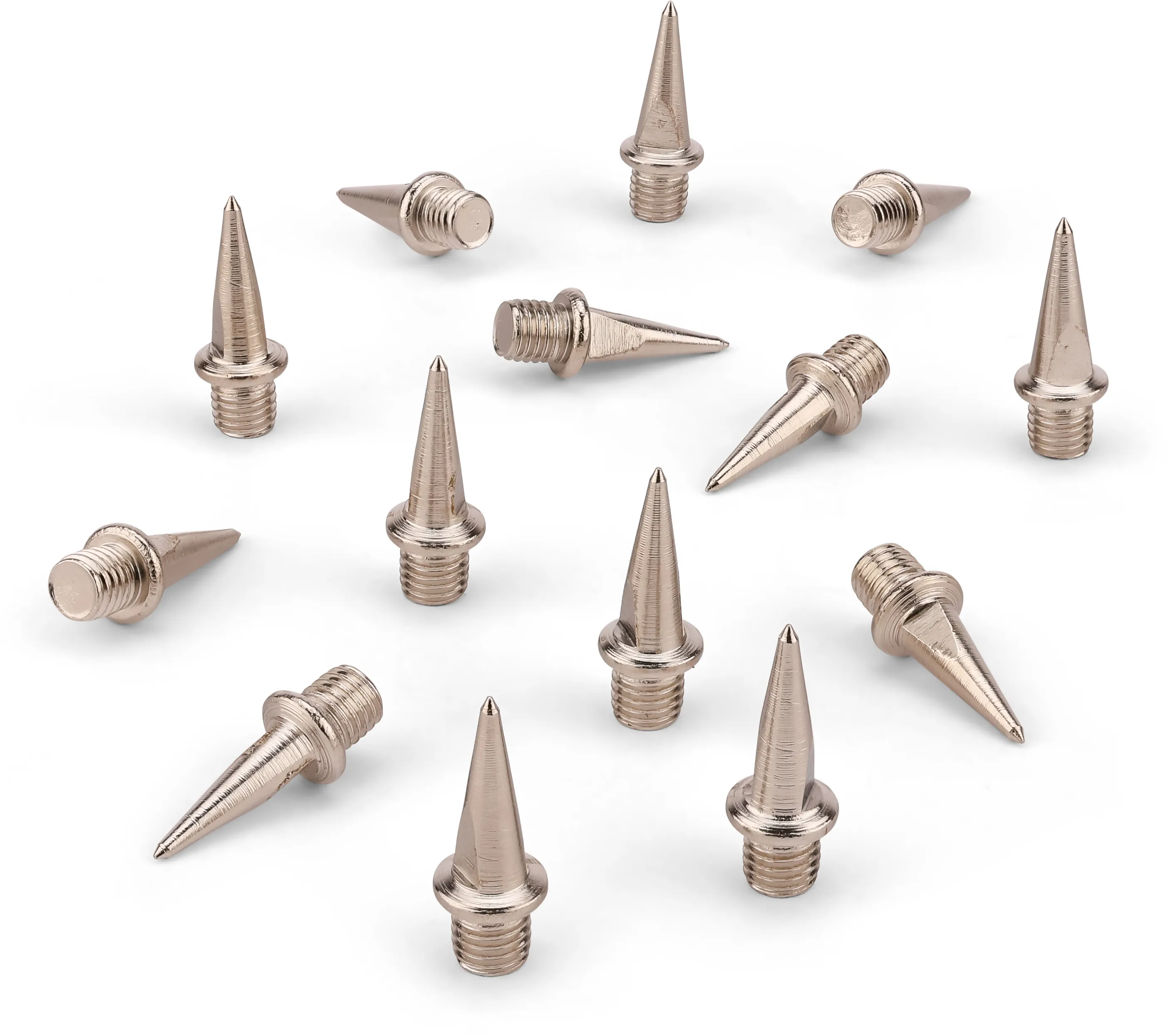
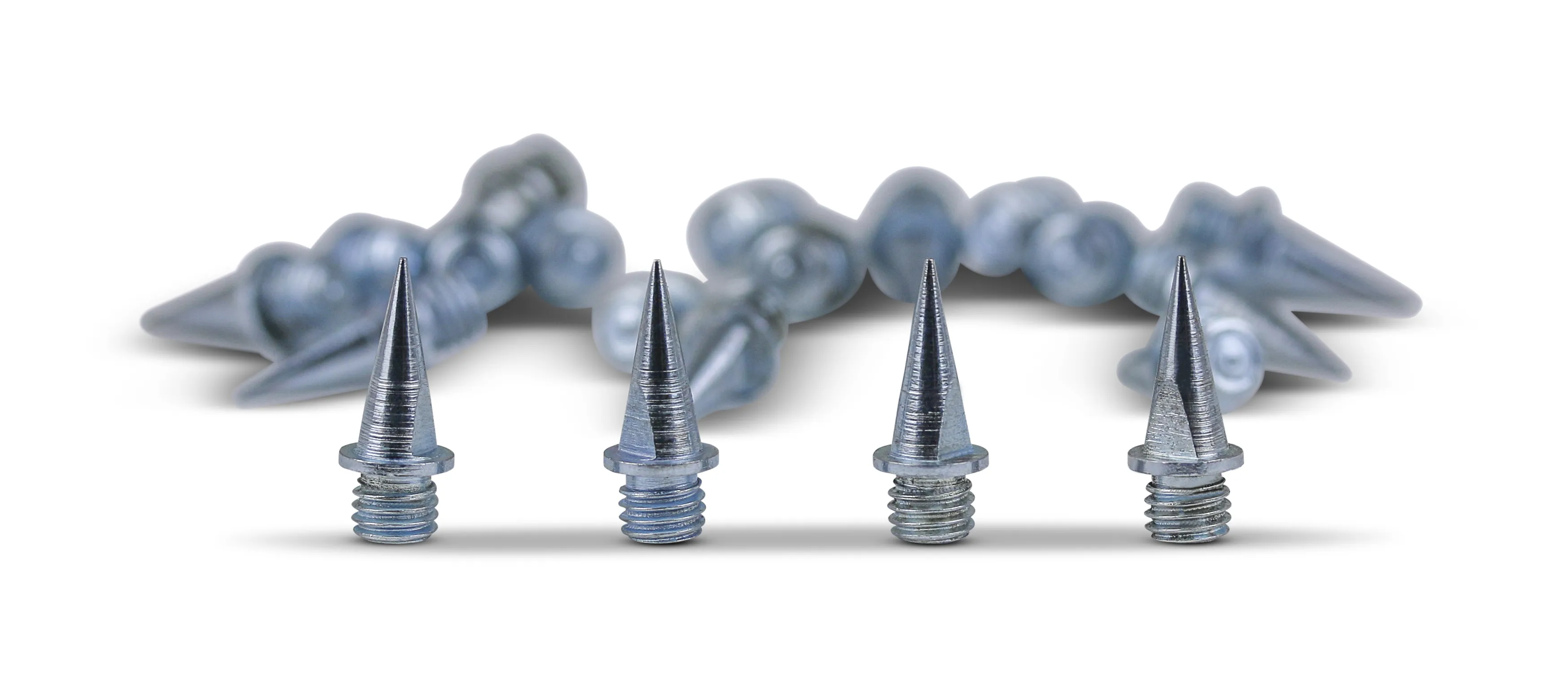
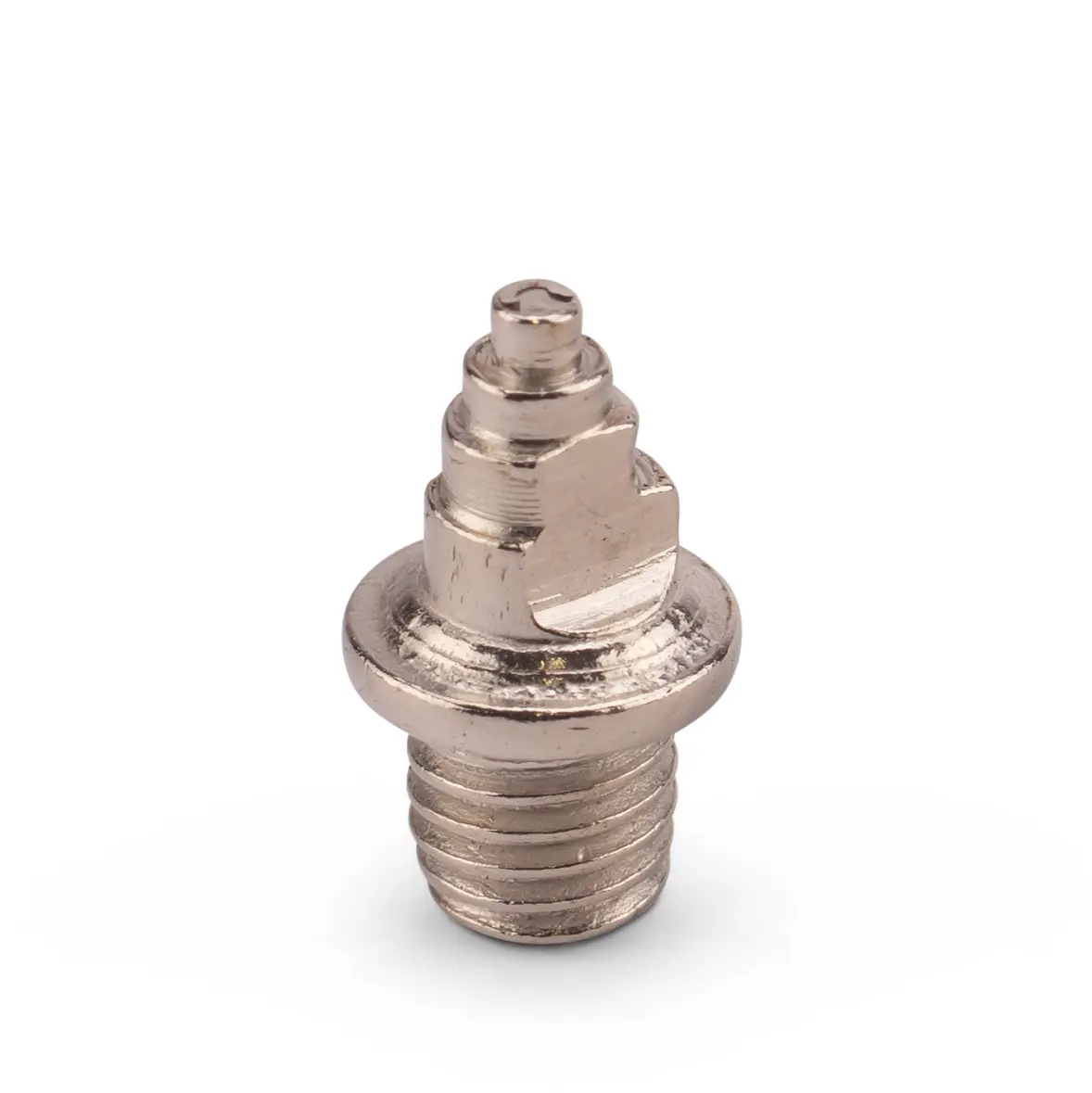


Spikes at Full Athletics
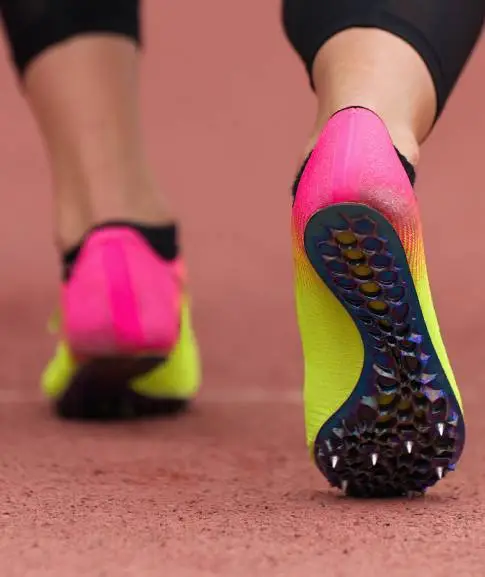
Spikes are essential for achieving peak performance in running, jumping, and javelin throwing. These compact shoe accessories offer athletes essential traction on a variety of surfaces, enabling them to perform every movement with precision and efficiency.
The term “spikes” refers to the pointed protrusions that are attached to the soles of shoes designed for specific sports. Selecting the right spikes involves considering various factors, including the intended use, the type of surface, and the athlete’s personal preferences.
The right length of spikes
The length of the spikes is crucial and should be carefully adapted to suit the surface and the specific discipline. The length of spikes may be restricted to 9 mm for high jump and javelin throwing venues, while the maximum length may be limited to 6 mm for all other competition facilities. You can find the organizer’s specifications in the respective event announcement.
| Spike length | Where used | Surface |
|---|---|---|
| 5 mm | Required for sprinting and for certain Mondo competition surfaces | Tartan (plastic), hard ground |
| 6 mm | For running, jumping, and throwing disciplines on tartan tracks | Tartan (plastic) |
| 9 mm | For jumping disciplines and javelin throw | Tartan, ash |
| 12 mm | For cross-country running | Ash, soft ground, or wet surface |
| 14 mm | For cross-country running and starting blocks | Ash, soft ground, or very wet surface |

Spike length and shape: The perfect combination
The right combination of spike length and shape is crucial for achieving optimal grip and peak performance. The length of the spikes is tailored to suit the specific discipline and external conditions, while their shape is equally important in enhancing power transmission and stability. In the upcoming section, you will find out how the different shapes of the spikes can impact your performance.
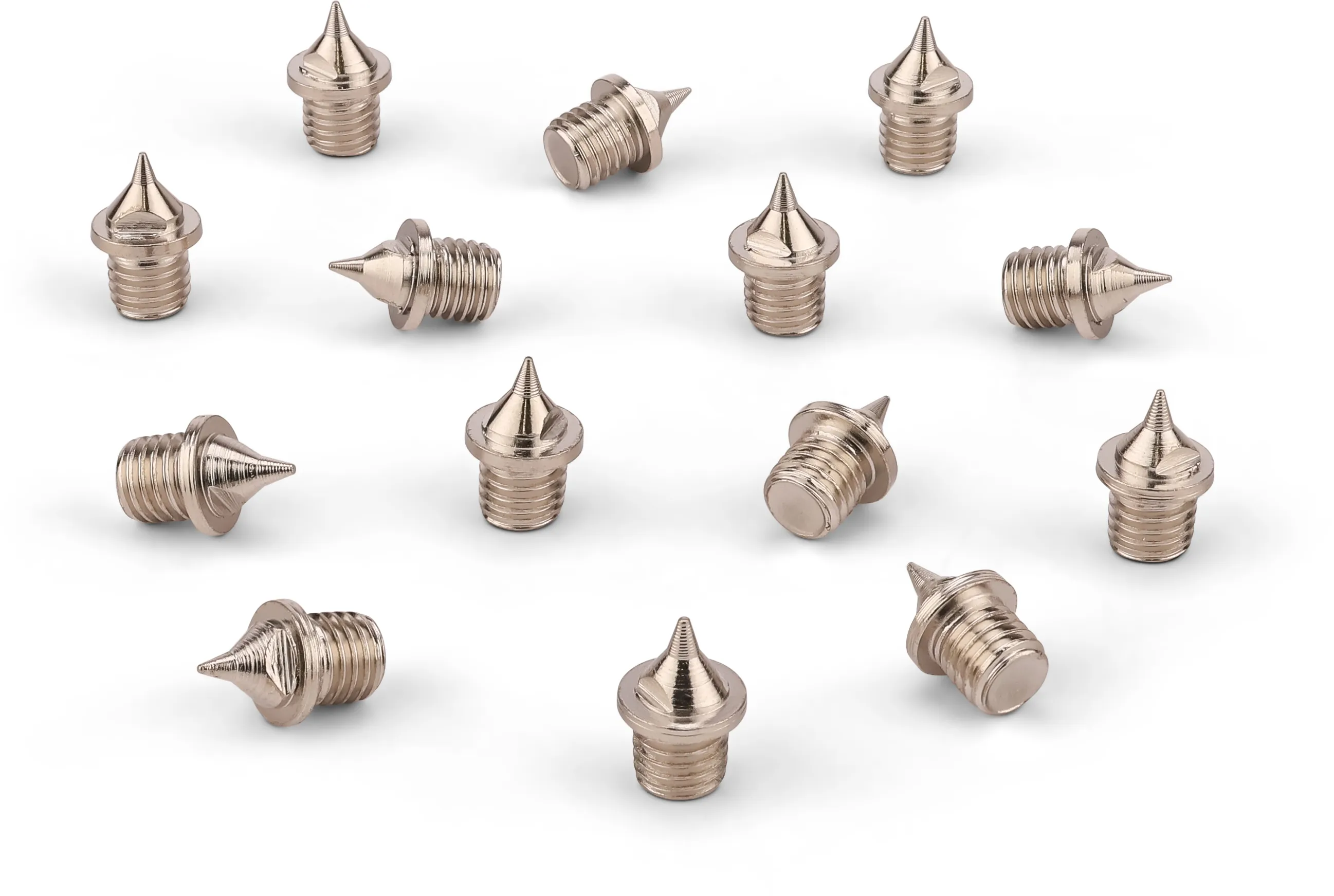
The different shapes of spikes
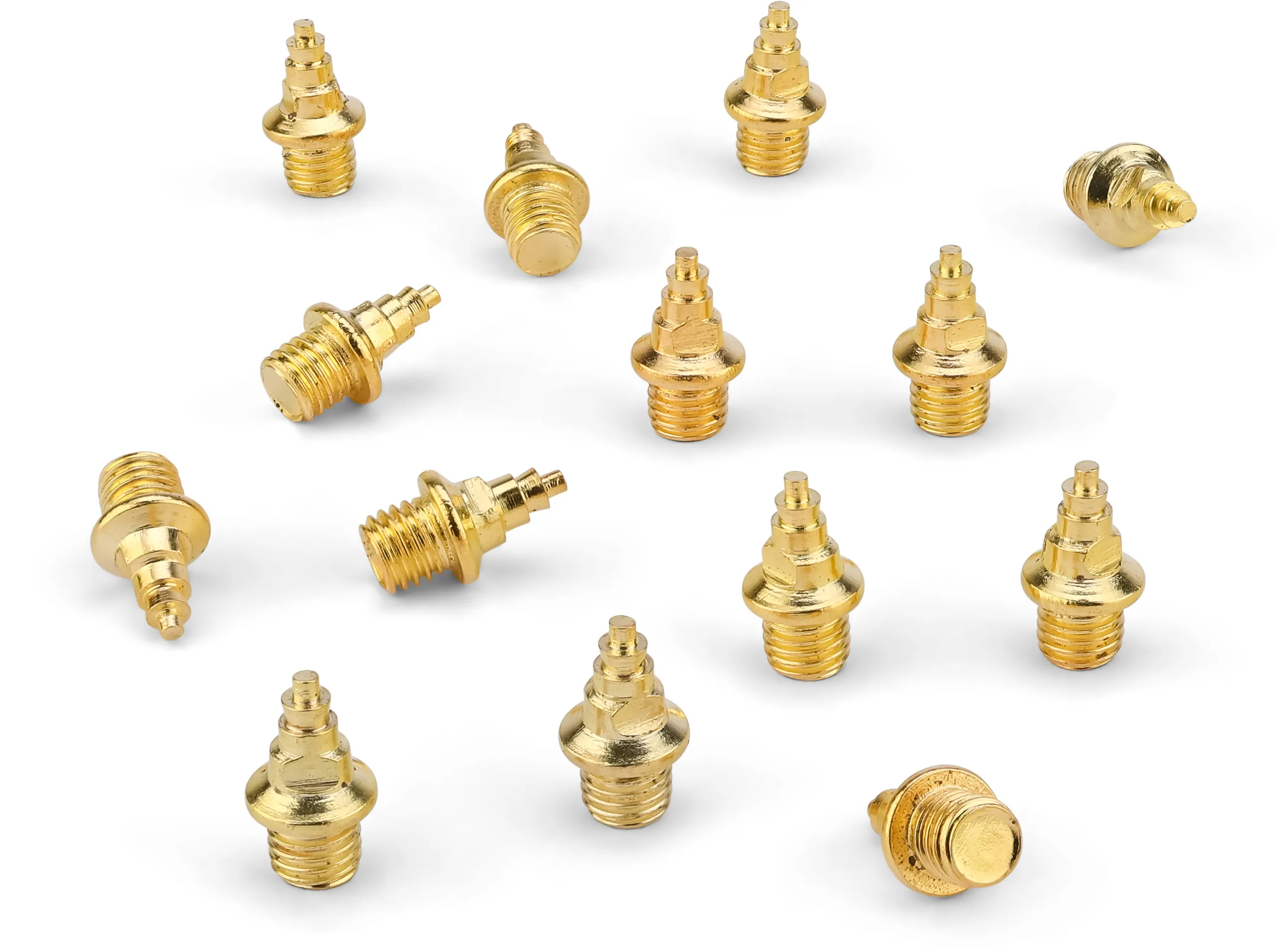
The shape of the spikes affects both grip and traction.


Spike materials
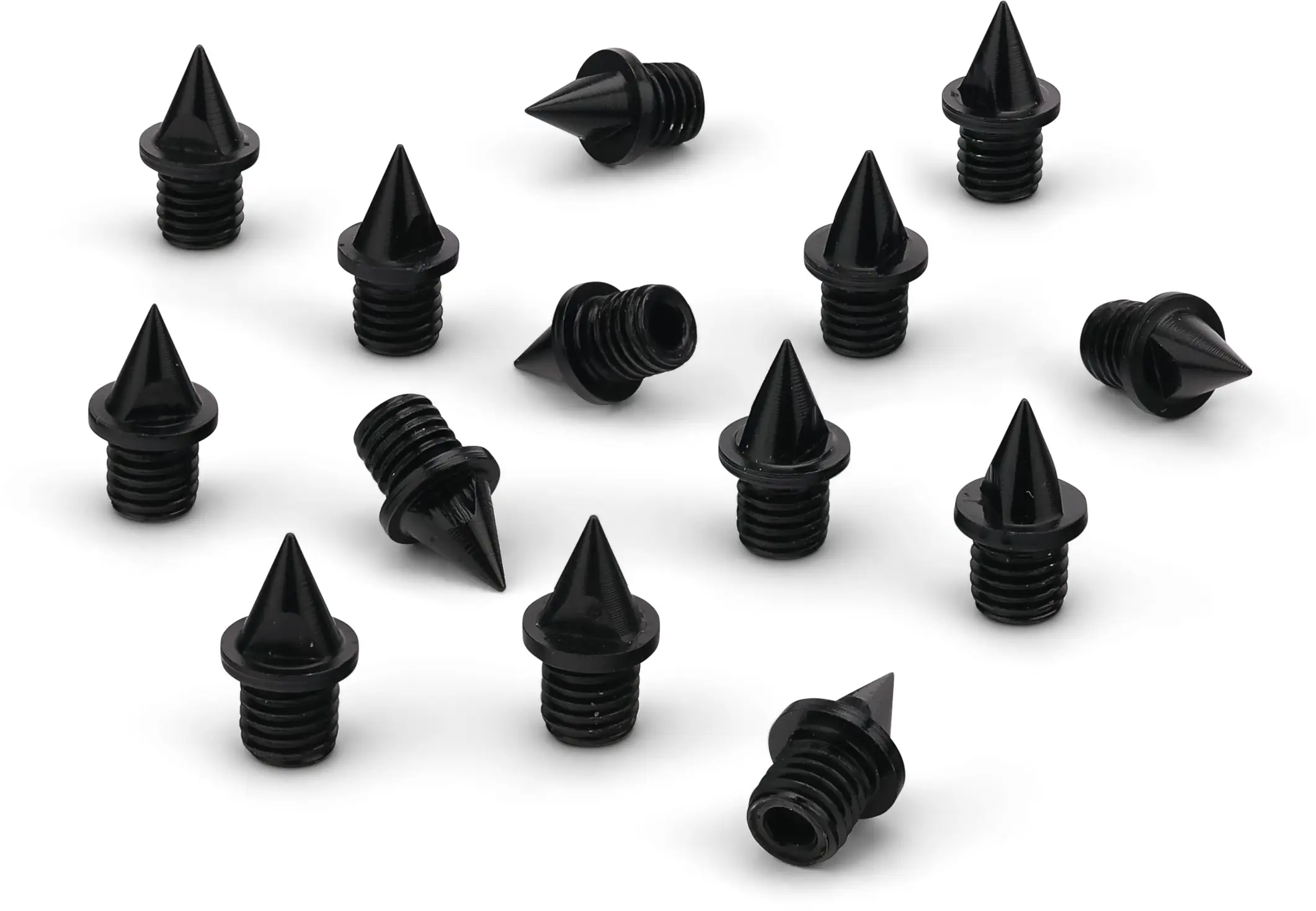
Spikes are made from a variety of different materials, each of which has its own advantages and disadvantages. The most frequently used materials are steel and aluminum.
- Steel spikes are sturdy and long-lasting and feature outstanding traction. Thanks to their durability, they are especially well-suited for training and are highly recommended for beginners. However, they are heavier than aluminum spikes.
- Aluminum spikes are significantly lighter and yet still deliver excellent performance. However, they tend to wear out more quickly and should be replaced after every competition. Aluminum spikes are especially advantageous in disciplines where lightweight design plays a role, such as sprinting and hurdles. However, they are not as well-suited for other sports such as javelin throwing, where stability is more important.
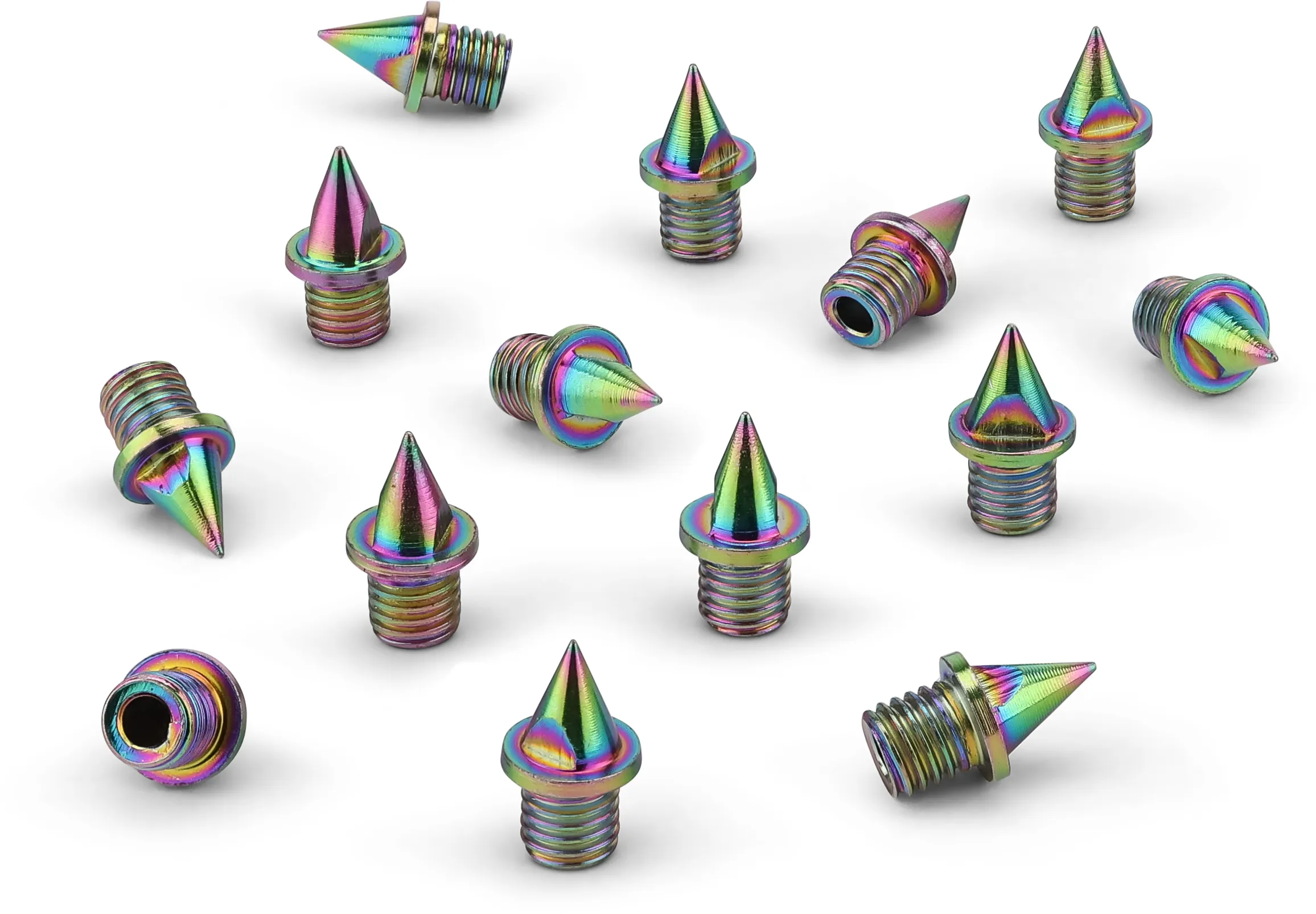
- Hollow aluminum spikes are even more lightweight and are frequently paired with carbon spike shoes. For elite athletes for whom every gram counts, a lighter weight can significantly impact performance.
The choice of the right material depends on the athlete’s personal preferences and performance level.
Colored spikes
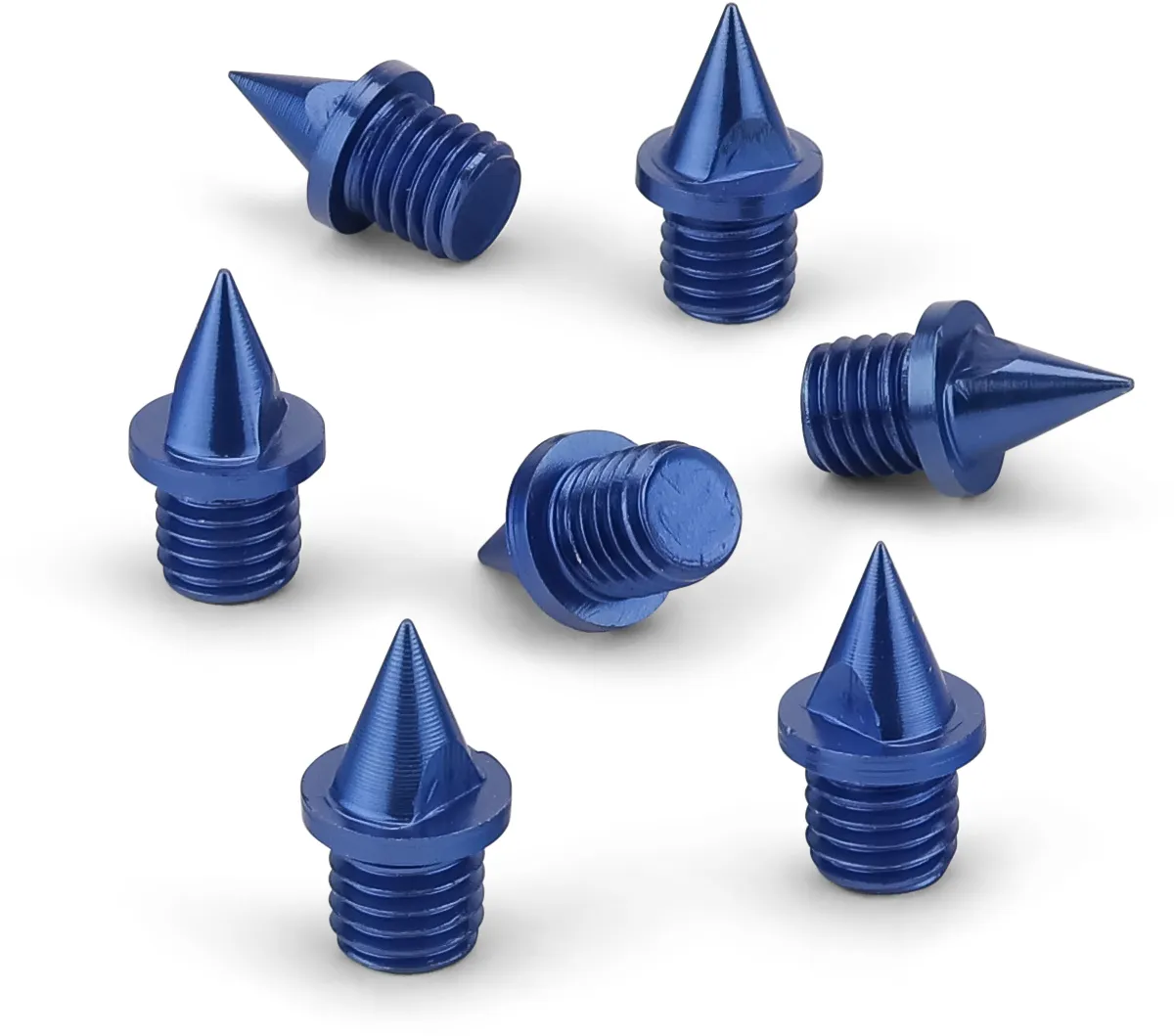
Colored spikes crafted from anodized aluminum serve as a visual enhancement, but the color lacks resistance to abrasion. These spikes are therefore more suited for athletes who appreciate a unique look and frequently replace their spikes.
Fastening spikes correctly
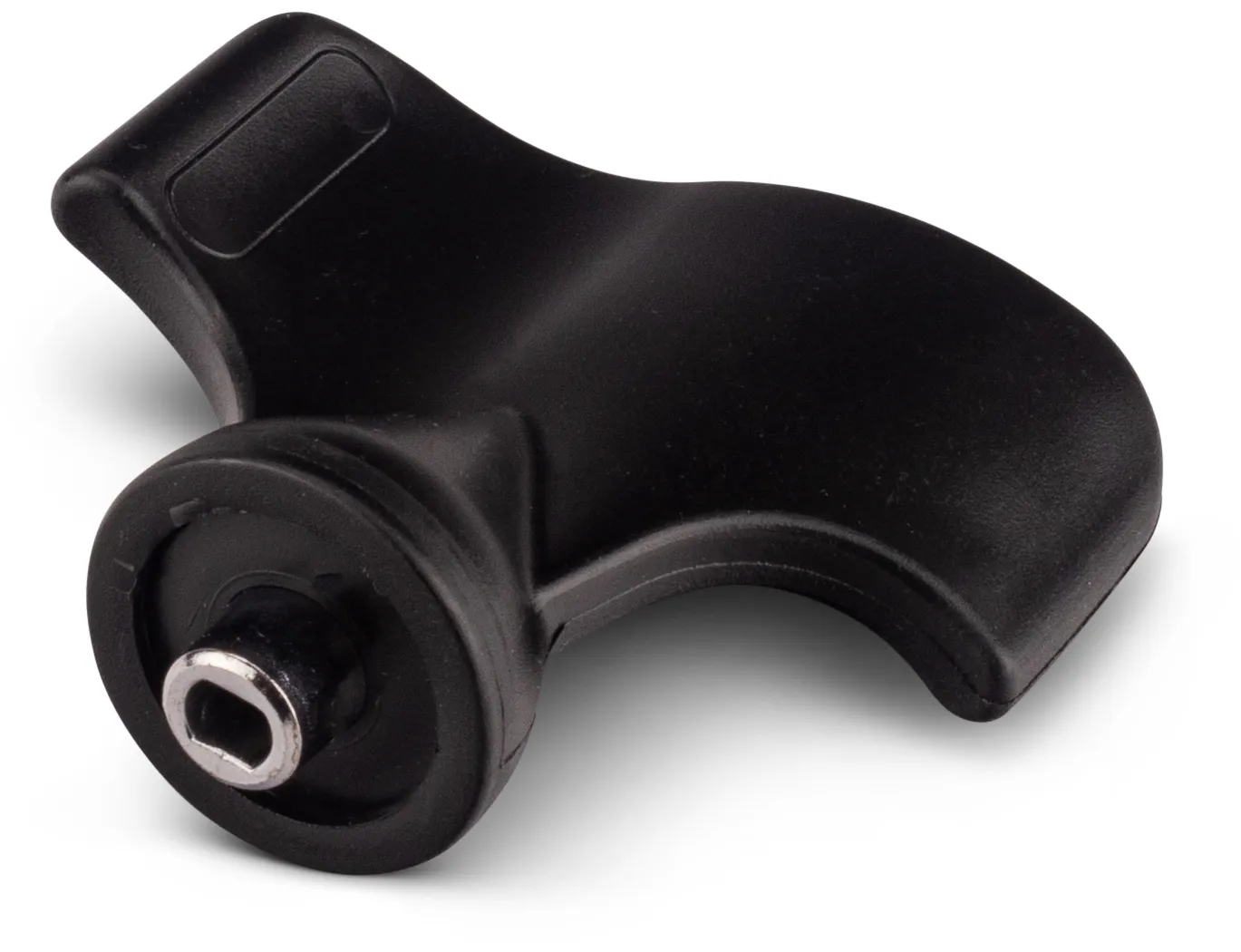
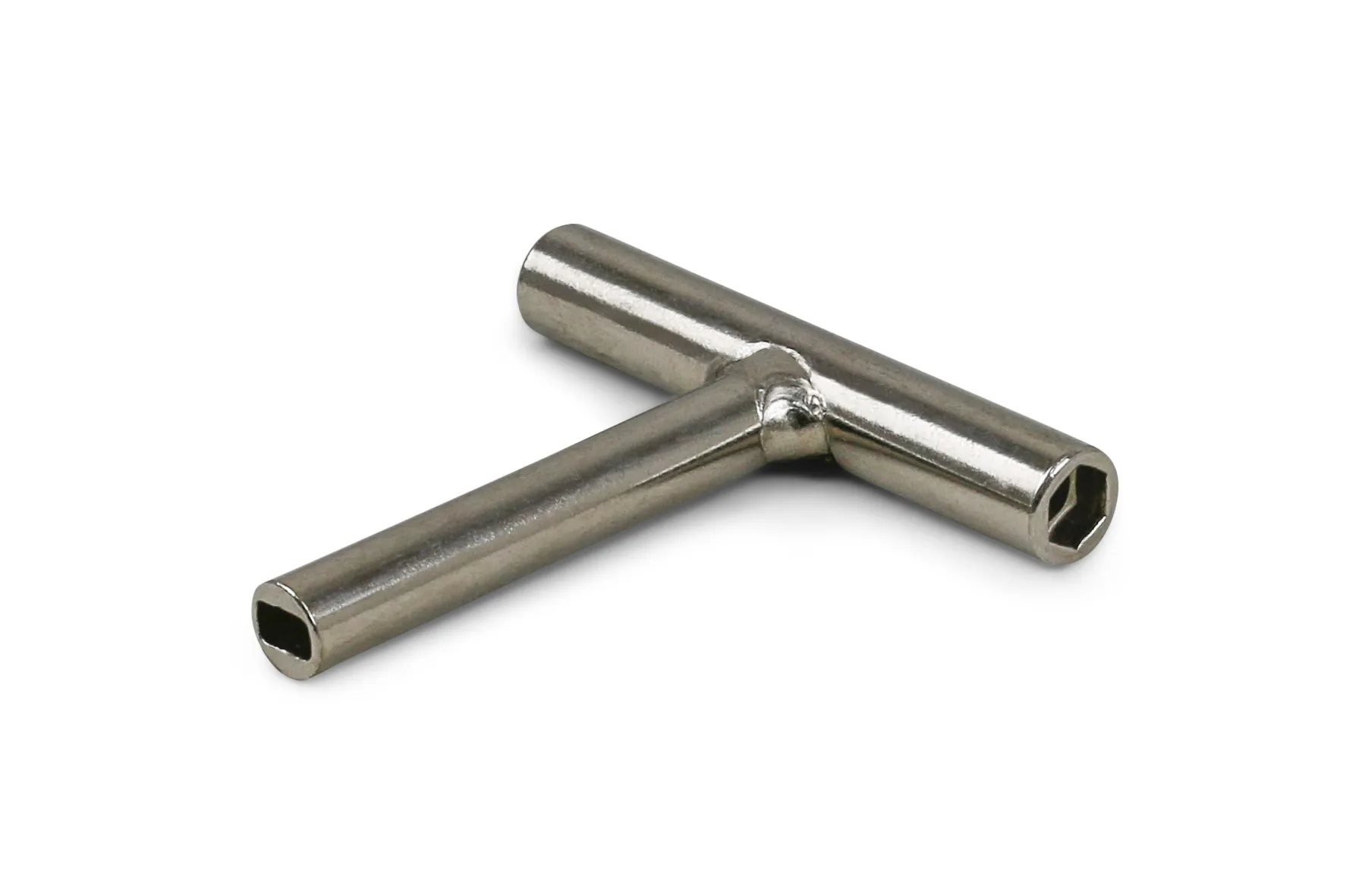
Spikes are secured to the bottom of the shoe by means of a simple screw system. The sole of the shoe features threaded inserts into which the spikes are screwed. Always ensure that the threads are clean. Choose the appropriate spikes and screw them into the threaded inserts by hand. Then use a special spike wrench to ensure the spikes are tightened securely into place. Finally, check that all spikes are firmly tightened to prevent any loosening during training or competition.
The Full Athletics range
In addition to spikes, Full Athletics offers a wide range of sports equipment. Whether you are looking for jump ropes, training hurdles, or balance equipment for coordination training – at Full Athletics you will find everything you need for comprehensive training. With a focus on quality and functionality, Full Athletics is the perfect partner for clubs, schools, and ambitious individual athletes.
Please contact us if you have any questions. You can reach us by phone during our business hours, and we will be happy to provide you with comprehensive advice. You are also welcome to use our contact form if you have any questions.