
Bib numbers are used for a variety of purposes in athletics competitions. One of the primary purposes of bib numbers is to help officials and judges keep track of athletes and their results, as well as to identify any disqualifications or errors that may occur during the event.
Bib numbers are also used to help spectators and media identify and follow specific athletes, and they may be used in conjunction with other identification methods, such as electronic timing chips, to track an athlete's progress in a race or event. To buying guide »
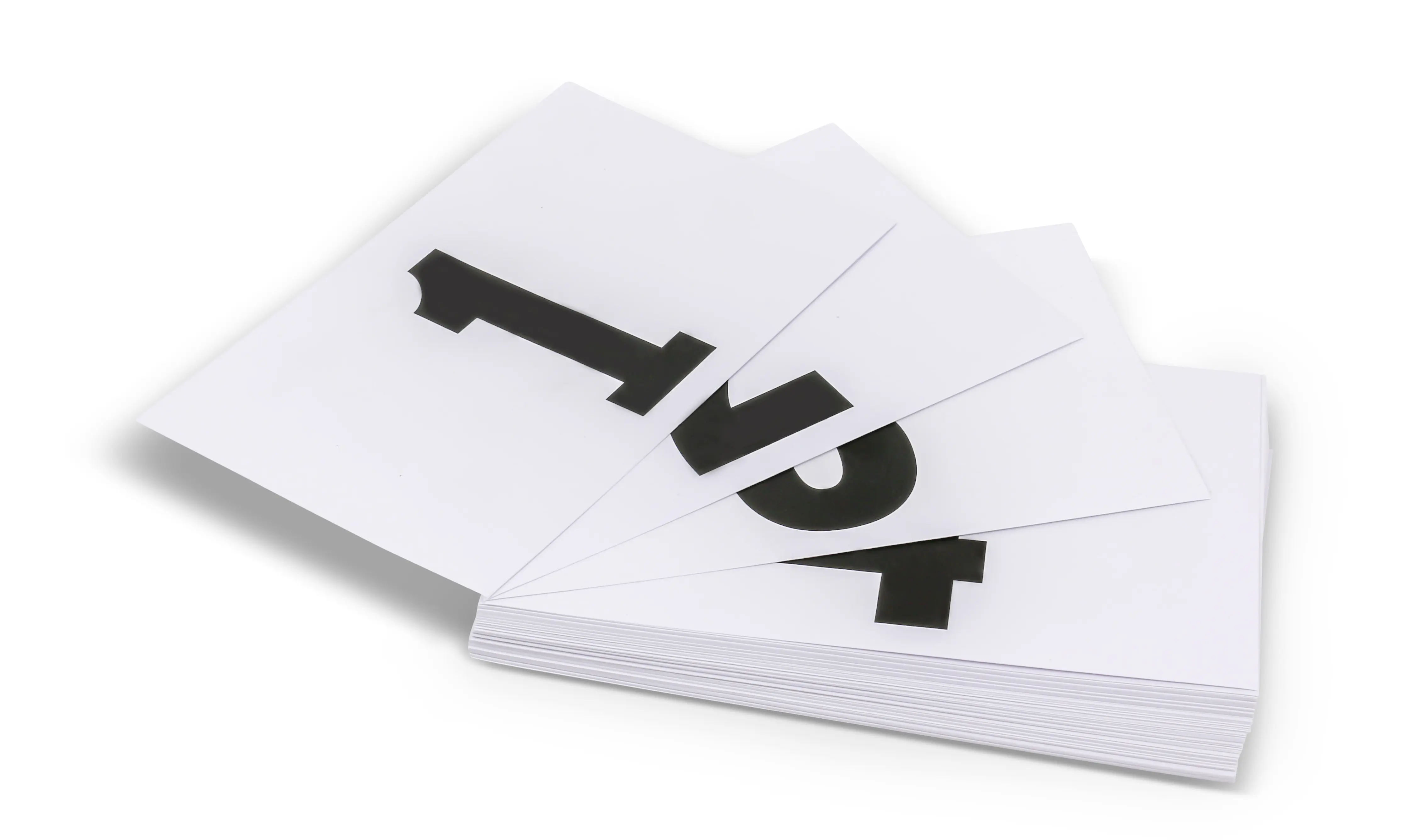
Our competition numbers
Our competition numbers are available in sets of 100 from 1 to 500. Beside the standard size, we offer tiny tear-resistant competition numbers, particularly useful for kids‘ athletics (or as hip numbers for professional athletics events).
Overall, competition paper numbers are an important part of many athletics competitions, as they help to identify and distinguish athletes from one another and facilitate the smooth operation of the event.
FAQ
Why should we use competition paper numbers during athletics events?
Competition paper numbers, also known as bib numbers, are used in athletics competitions to identify and distinguish athletes from one another. These numbers are typically made of paper and are attached to the front of the athlete's clothing, usually on the chest or stomach.
Why are there different sizes of competition paper numbers?
The size of competition paper numbers is typically based on the specific needs and requirements of the event and the athletes participating in it. Some factors that may influence the size of a bib number include the size of the athlete, the type of clothing they will be wearing, and the specific requirements of the event.
What are the advantages of paper bib numbers as opposed to synthetic bib numbers?
Paper bib numbers are disposable and can be easily discarded after an event, which can be more convenient and environmentally friendly than having to clean and store reusable synthetic bib numbers. In addition, paper bib numbers are generally less expensive than synthetic bib numbers.