


We offer a variety of jump ropes for adults and children for use in the fitness studio, in sports clubs, as a form of leisure activity, or as part of school sports. Jump or skipping ropes help to train different muscle groups and different areas of fitness, as almost all the muscles in the body are engaged during a jump rope-focused activity.
This has an overwhelmingly positive effect on the body. For this reason, jump ropes are also often used as a part of gymnastics and dance training. To buying guide »
What are the Advantages of Training with a Jump Rope??
A jump rope is an all-rounder of a piece of equipment. Highly versatile, a jump rope can be used as a part of strength training as well as for training in areas of endurance, speed, core muscle training, and improving coordination.10 minutes of rope jumping burns as many calories as a 30-minute jog and the jump rope is therefore a very effective piece of training equipment.
An obvious advantage of the jump rope is that it can be taken anywhere, meaning small training sessions can be conducted wherever you might find yourself. While other workouts and jogging sessions train the upper part of the body, exercises with a jump rope work the muscle groups in the legs, accelerating the burning of fat and allowing visible results to be achieved more quickly. It is the perfect sport discipline for children and, thanks to the extendable jump ropes available, is a tool that can be used by many people of different shapes and sizes.
Jump ropes are especially good at improving coordination and reflexes. Training with a jump rope is a targeted and concentrated form of exercise. It's also perfect as a warm-up. This is especially important in the world of boxing, as it warms up the wrists and optimizes bounce technique.
Rope jumping is for everyone as it requires no prior knowledge or training. Further down the line, there is the chance to add weights to the rope thereby altering the speed of the rope and the kinds of jumps possible as a result. As a competitive sport, there are individual and team competitions. The speed discipline focuses on the speed of the athlete and their jumps whereas the freestyle discipline places a greater focus on the different styles of jumps as they are set to music.
An Overview of the Advantages of Rope Jumping
- Highly effective training for cardiovascular fitness
- Requires one inexpensive purchase
- Provides an effective form of training regardless of the athlete’s location
- Equipment is easy to transport
- Suitable for everyone, from absolute beginners to trained professionals
- Offers a multitude of training possibilities

Jump Ropes in Athletics
Jump ropes are an indispensable part of general athletics training. They are not only a great addition to a varied form of more basic training, but can also be used for more specific, highly focused forms of exercise, such as small ankle jumps. Athletes who train a lot with spikes on synthetic surfaces can use rope jumping effectively to help prepare the muscles around the ankle and lower leg for this type of high-impact sport.
The Different Types of Jump Ropes Available
In Full Athletics online store, you'll find a large variety of jump ropes suitable for every kind of jump rope-orientated exercise.

Gymnastic Ropes
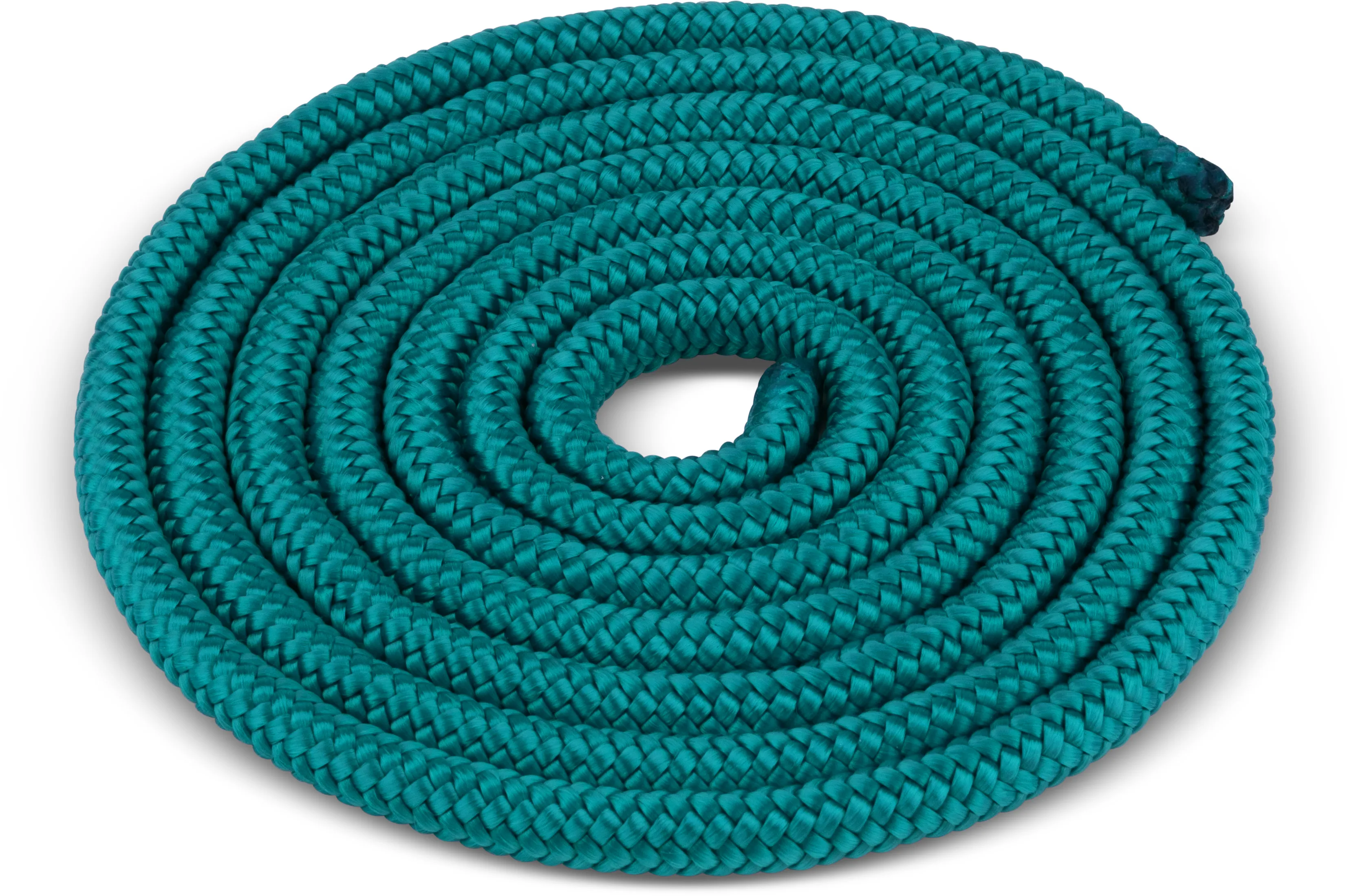
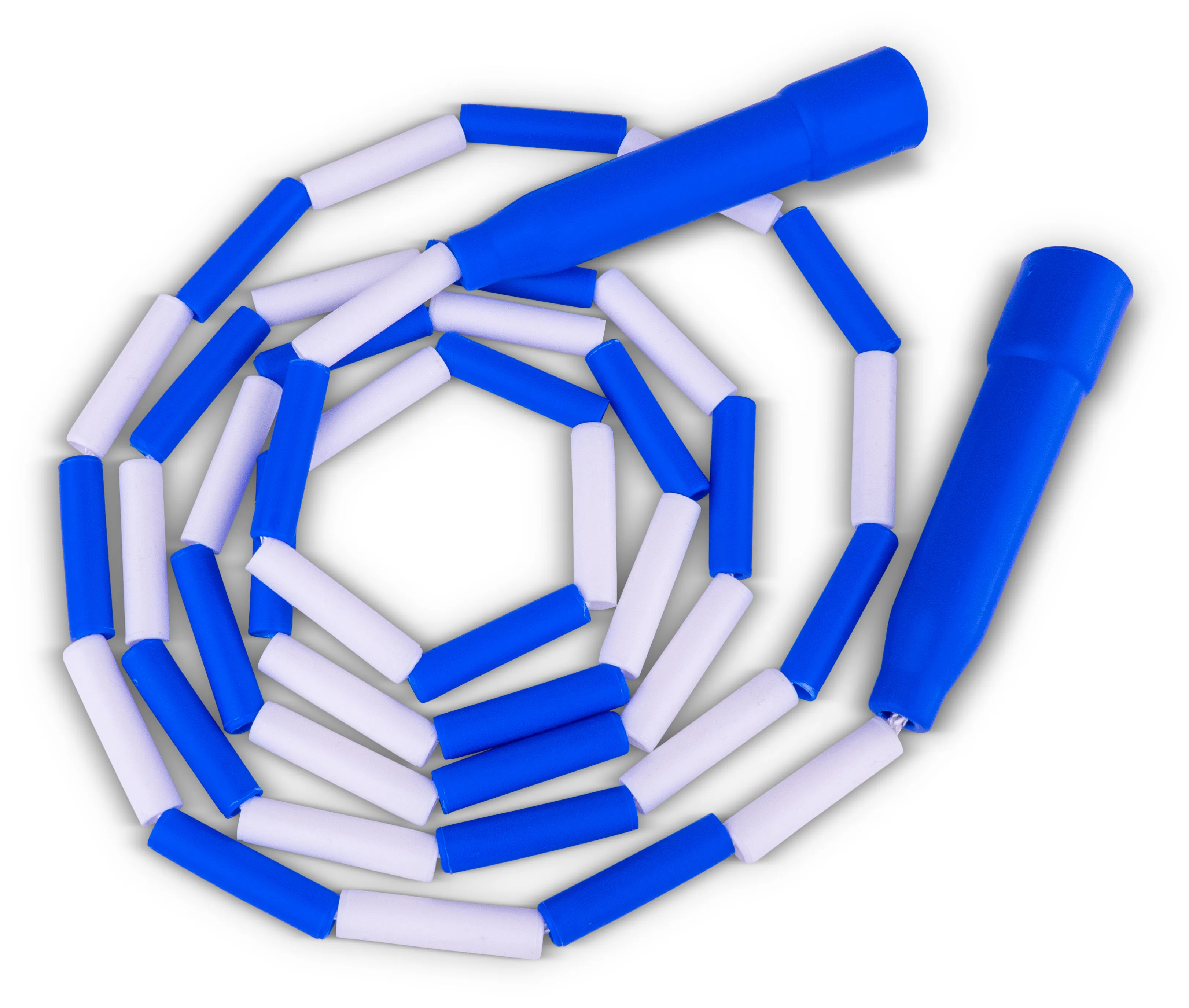
We offer the classic gymnastic jump rope made from cotton and suitable for sports lessons. The material is a great choice for beginners and children. Elasticated jump ropes are also available in lengths of up to 12 m so that several people can jump at the same time.

Speed Ropes
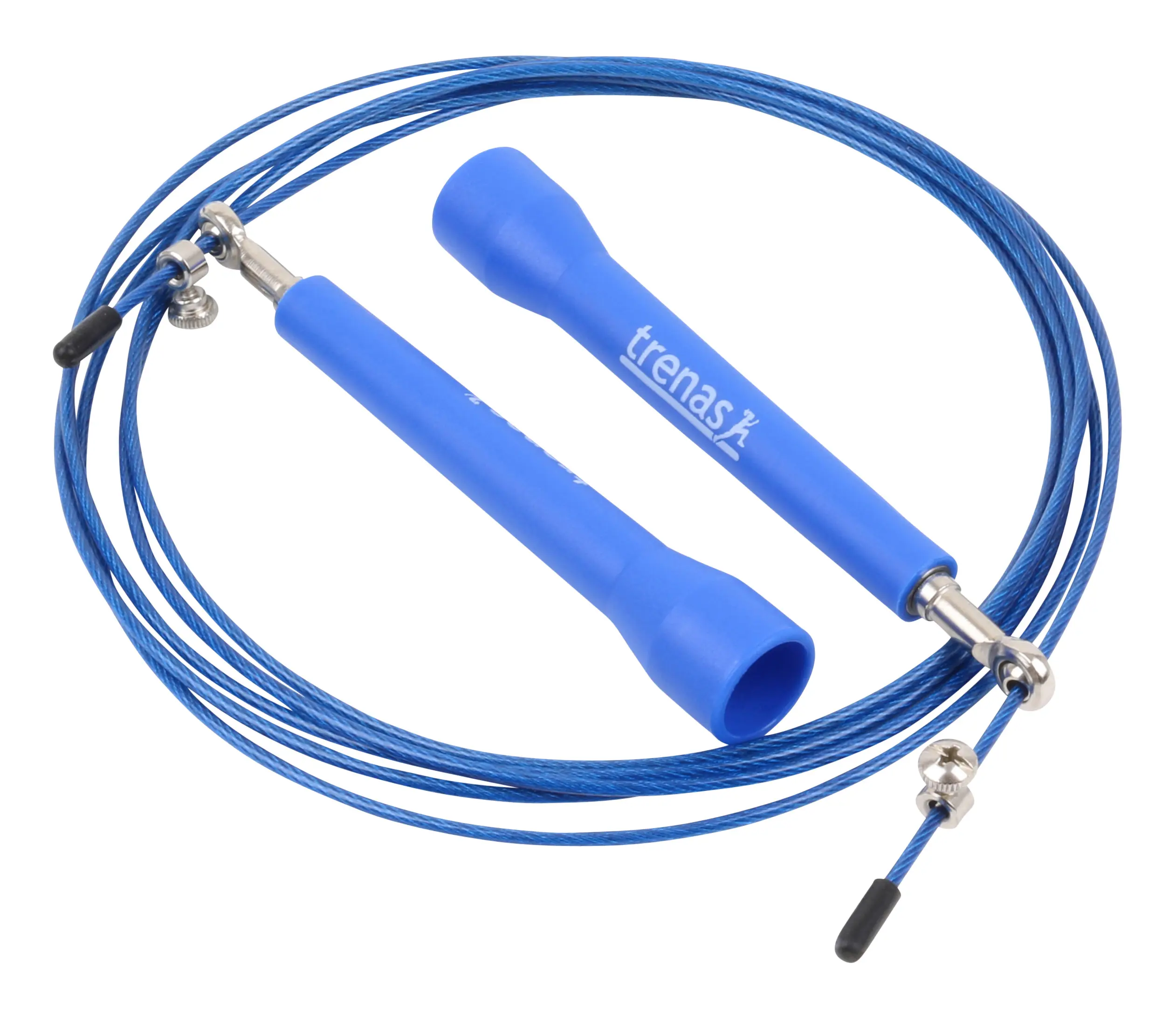
We also offer a range of speed ropes. These are professional jump ropes made of plastic-coated wire or steel ropes with ball-bearing handles. They are well-suited for intensive training sessions at higher speeds. They are also thinner than the cotton and hemp models. They are fitted with longer handles for freestyle skipping. They are specifically designed for jumping at speed and are mainly used indoors, as they would wear out quickly on rough surfaces such as sidewalks.
Training Exercises with the Jump Rope
A jump rope enables you to build an effective training program, in both coordination improvement and fat burning, from the comfort of your own home. 15 minutes of training in this way can be easily integrated into a busy daily routine. Beginners should start slowly with plenty of breaks built in. We recommend 30 jumps followed by a 30-second break.
Another way to use the jump rope is as a warm-up exercise before other sports disciplines, such as gymnastics, aerobics, or yoga. When selecting the surface upon which to carry out this kind of exercise you want a material that is not too hard or too soft, as this will force the rope to break and the physical strain on the joints can be too high. Wooden, indoor, or carpeted floors are well-suited.
Discover Other Fitness Equipment

What Kinds of Jumps Can Be Done with the Rope?
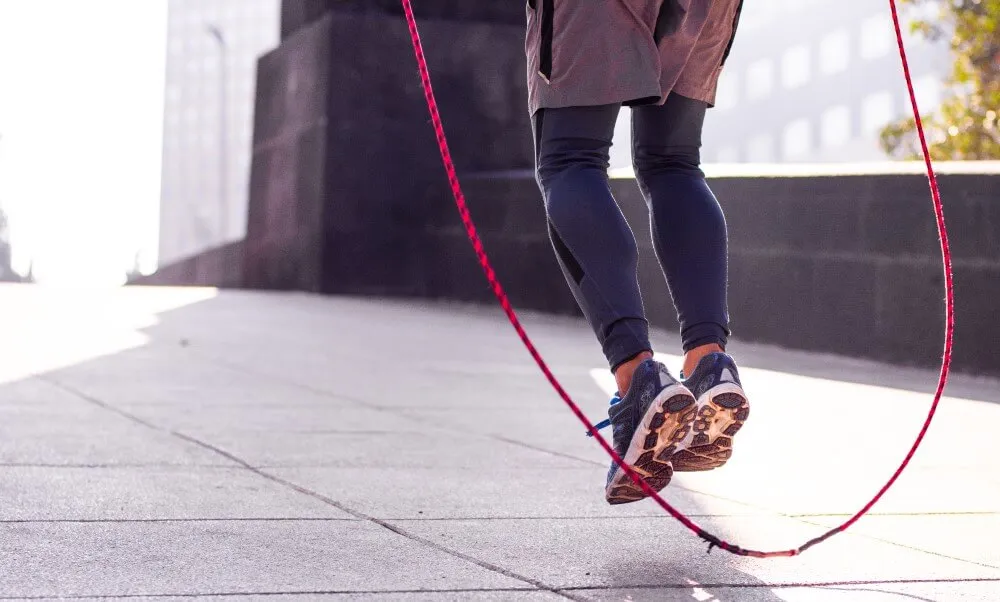
A typical jump with a rope sees you swing the rope from behind your wrists and over your head. When the rope is at head height, you jump so that the rope swings under your feet.
Once seen as a sport just for children, rope jumping has become an important part of fitness studio training regimes. It is both an ideal warm-up exercise for the entire body and a great form of cardio training. As already mentioned, rope jumping is also important to boxers as it trains rhythm, balance, orientation, and responsiveness.
Rope jumping is often used in school sports to encourage the development of balance and cognitive skills in young children.
Robust running shoes with cushioning properties are the best kind to wear when rope jumping.

Classic Rope Jumping
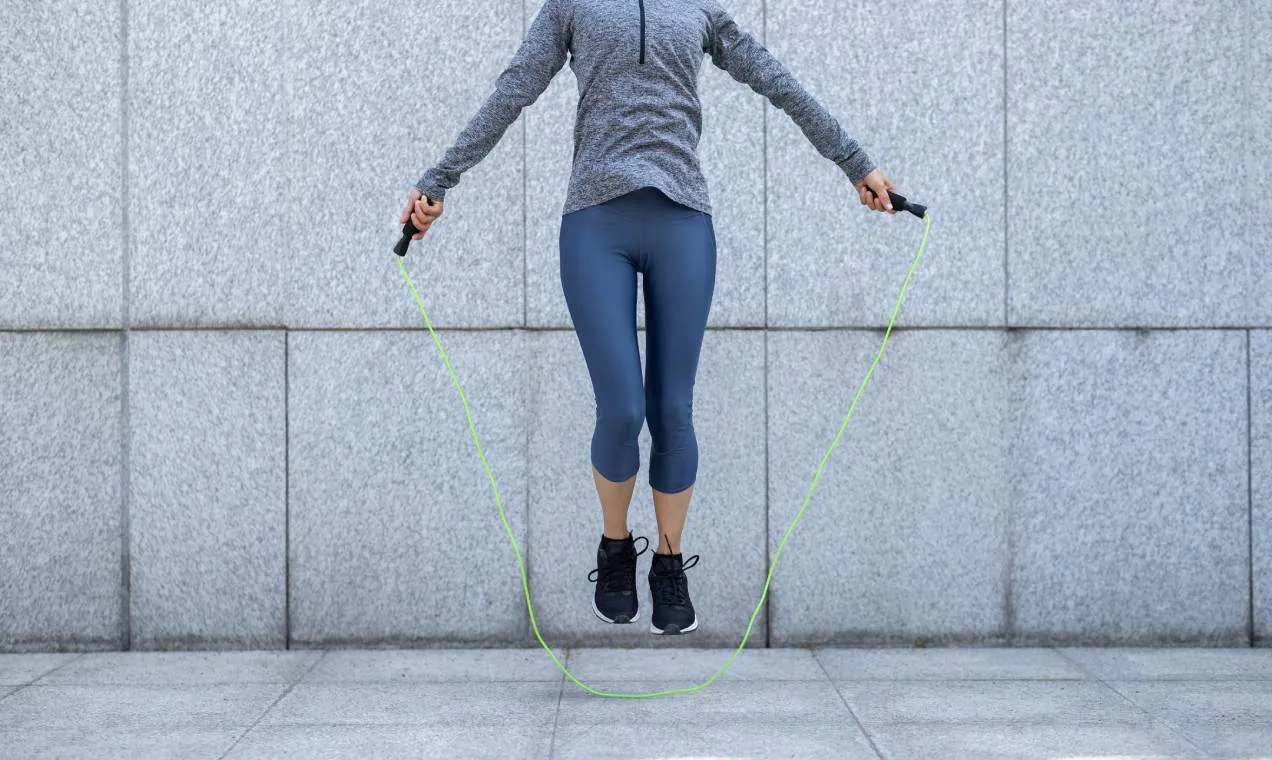
In classic rope jumping, start in an upright position with your hands at hip height and jump off the ground with both feet while swinging the rope over your head from behind. To train the abdominal muscles most effectively, tense the center of the body during the jump.
Jumping Jacks
Another popular exercise with the jump rope is jumping jacks, which work the legs, calves, buttocks, arms, shoulders, and abdomen. To do this exercise, swing the rope up and over your head and alternate opening and closing your legs with each jump.
Cross-Over Rope Jumping
To perform this exercise, cross the rope in front of the body as you bring it over your head, and jump through. This is a more difficult exercise to perform. This exercise strengthens coordination as well as all muscle groups in the legs, calves, buttocks, arms, shoulders, and core.
One Leg Jumping
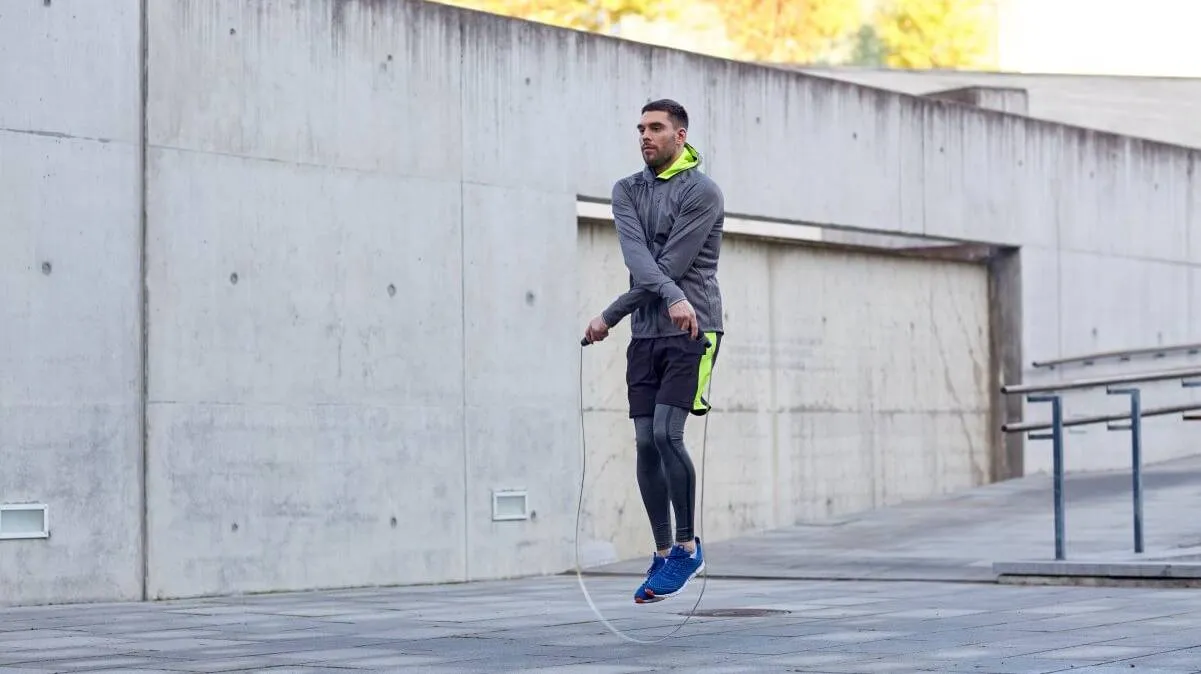
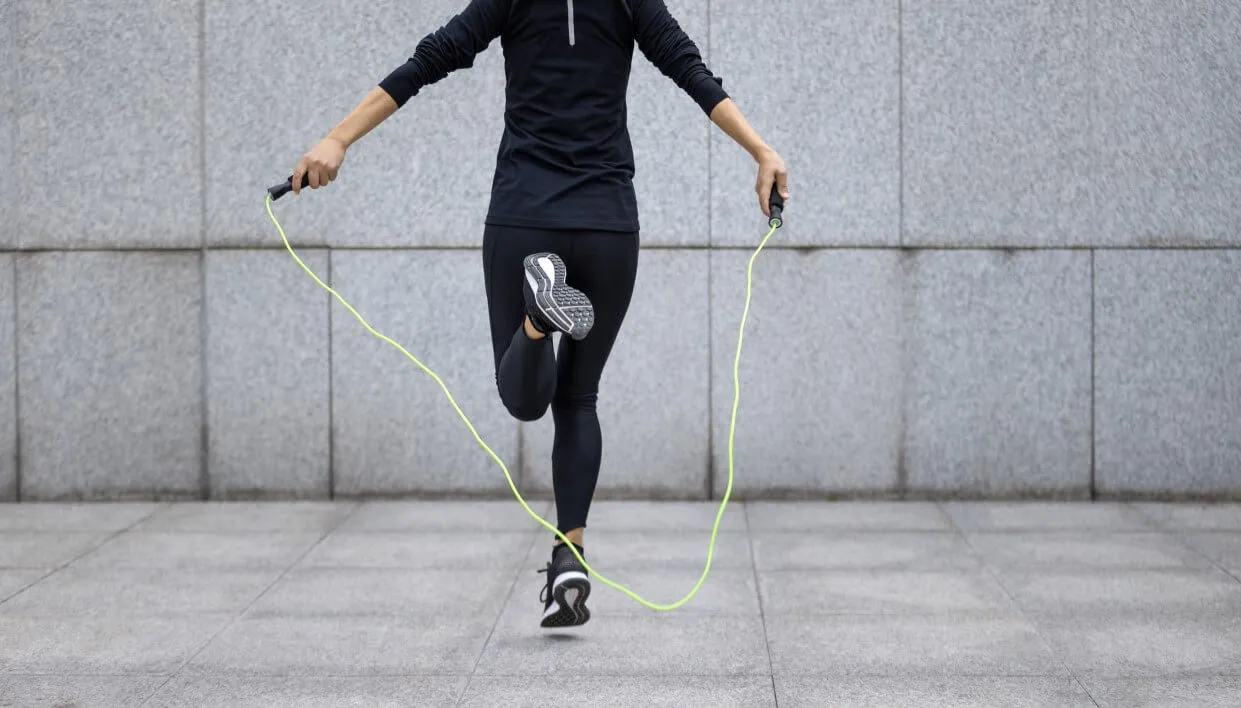
Another type of jump is to jump on one leg only, thereby training coordination and the leg muscles. Focus here on a soft landing and perform this kind of exercise on a generally softer surface. If you suffer from knee problems you should avoid this kind of jump. To make this jump more difficult try switching legs as you jump the rope.
We offer jump ropes in the following lengths:
Our ropes are made from cotton, wire cable, elastic, synthetic fiber, or plastic. You can choose between models without handles, with ball bearing handles, with plastic handles, with cross handles, or with a loop. We offer jump ropes from well-known manufacturers including Deuser Sports, HAEST, and trenas.
Discover Our Brands



Discover, for example, the trenas Speed Rope for fast and effective rope jumping. The handles can rotate freely so that the rope cannot twist, and the handles can also be moved so that the rope can be shortened to your desired length.
As well as the speed rope made from synthetic material, we also have a speed rope made from wire cable. With a cross-mounted handle, this rope is ideally suited for experienced athletes. The wire cable ensures exceptionally high speeds of rotation. The cable's length can be adjusted by hand. The cross-mounted handles make the rope very aerodynamic.
The trenas Speed rope with ball bearings comes equipped with thick plastic handles making it possible to jump quickly and effectively.
With handle type of particular importance to professional athletes, professional speed jumpers usually use cross-bearing handles or ball-bearing handles to be able to jump even faster.
Another advantage of jump ropes with ball bearings is that the weight of the rope is evenly distributed over the rope rotation. This makes it easier to achieve smoother turns of the rope as the angle is slightly changed during the jump.
FAQ
How do I find the right length for the jump rope?
To check if the rope is the right length, stand in the middle of the rope and pull it along your body and up to your shoulders. The ends of the rope should reach your armpits. If they do, the rope is the right length. Adjustable jump ropes are recommended for beginners as the length can be altered. For a body height of 1.70, a jump rope of 261.5 cm is ideal.
What should be taken into consideration when choosing a rope for a child?
Safety is the most important consideration when selecting a rope for a child. Steel or wire ropes should not be used and the handles should be shorter to ensure they can be held properly.
What are the most important criteria when buying a jump rope?
When purchasing a jump rope the following aspects are the most important to consider. Firstly, the rope's diameter should be as small as possible: the thinner the rope, the flatter the jumps, and the higher the jump frequency. Secondly, the rope should be of high quality and well-constructed. Thirdly, look carefully at the construction of the handles.